Critical Elements Lithium Corporation says its Rose Lithium-Tantalum Project has been selected for inclusion in the prospectus for the Canada Investment Summit, a new national investment forum set to take place in Toronto on September 14-15, 2026.
The Montreal-based company, which trades as TSX-V:CRE, OTCQX:CRECF and FSE:F12, announced the news on September 11, 2026. The prospectus is being distributed to participants at the summit and includes information on selected Canadian investment opportunities, along with contact details allowing interested investors to follow up directly with project proponents after the event.
The Canada Investment Summit is described as a first-of-its-kind gathering, hosted by Prime Minister Mark Carney in partnership with CPP Investments and PSP Investments. According to the company, the summit is intended to bring together global investors, Canadian CEOs and public-sector representatives as part of a wider federal push to direct long-term capital into strategic Canadian industries and assets. Prime Minister Carney has stated that the investors attending the summit collectively manage more than $100 trillion in assets.
Critical Elements said its selection for the prospectus gives the Rose project visibility among a large international institutional investor audience at what the company described as a pivotal point in its development. Separately, the company’s chief executive, Jean-Sébastien Lavallée, has been invited by Prime Minister Carney to attend the summit’s welcome reception on September 13.
The summit itself is framed as part of a broader federal effort to strengthen Canada’s investment climate, diversify trade relationships and attract roughly $1 trillion in new investment over the next five years. Over its two days, the event is expected to focus on long-horizon capital and commercial opportunities tied to what organizers call productive assets that support Canada’s economic growth and resilience.
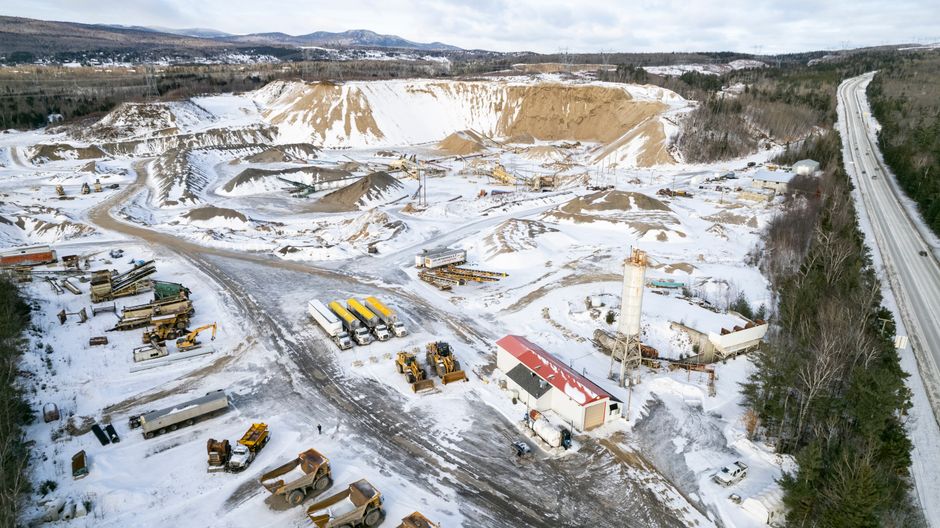
The Rose Lithium-Tantalum Project is Critical Elements’ flagship development, located in Québec within a land package spanning more than 1,016 square kilometres. The company describes it as its first lithium project being advanced toward production. A feasibility study released by the company in August 2023 estimated an after-tax internal rate of return of 65.7% and an after-tax net present value of US$2.2 billion, using an 8% discount rate, for production of spodumene concentrate.
Critical Elements has said Québec’s location offers strategic access to U.S. and European markets, along with infrastructure advantages including a power grid it describes as low-cost and low-carbon, with 94% of its electricity derived from hydroelectric sources.
The project has cleared several regulatory milestones, according to the company. It received approval from the federal Minister of Environment and Climate Change based on a recommendation from a Joint Assessment Committee that included representatives from the Impact Assessment Agency of Canada and the Cree Nation Government. It has also secured a Certificate of Authorization under Québec’s Environment Quality Act from the province’s environment ministry, as well as a mining lease from Québec’s Minister of Natural Resources and Forests under the province’s Mining Act.
Critical Elements describes its broader ambition as becoming a significant, responsible supplier of lithium for the electric vehicle and energy storage sectors.
This article is for informational purposes only and does not constitute financial, investment, or legal advice. Consult a licensed financial advisor before making investment decisions.
This article references reporting from: