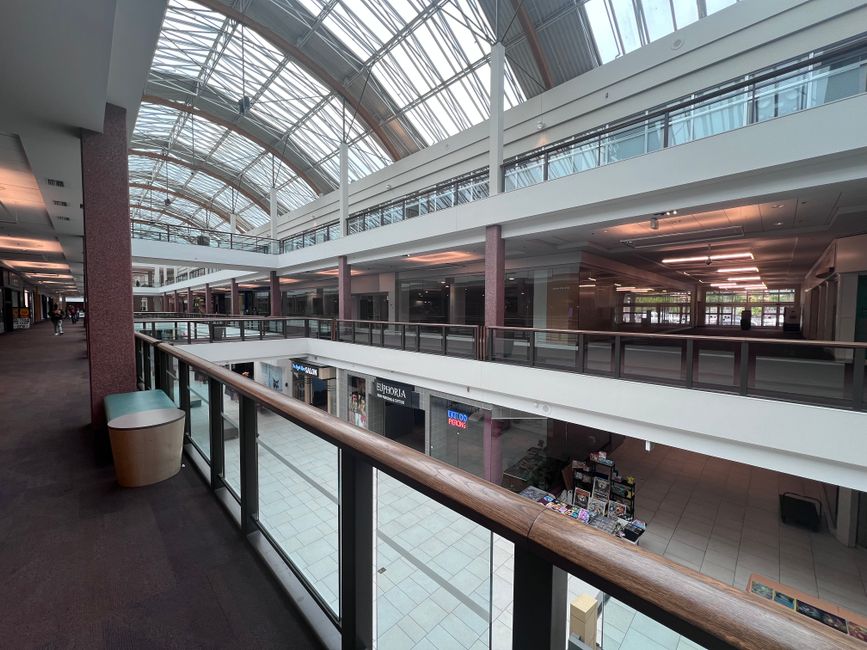
Canada’s retail real estate sector is undergoing one of its most active stretches in years, as institutional owners sell off shopping centres, retailers race to fill space vacated by Hudson’s Bay, and off-price and specialty chains push deeper into malls and urban corridors.
The clearest sign of the shift is Primaris Real Estate Investment Trust, which announced on September 14 that it is raising roughly $200 million in new equity through a bought-deal offering of 9.91 million units at $20.20 each, led by underwriters TD Securities, Desjardins Capital Markets and RBC Capital Markets. An over-allotment option could push gross proceeds to about $230 million. The Toronto-based REIT said the money will fund future acquisitions and general trust purposes — a disclosure that comes as Primaris confirmed it is in various stages of negotiation on more than $1 billion worth of potential shopping centre purchases.
Primaris Bets Big on Enclosed Malls
Primaris, Canada’s only publicly traded REIT focused specifically on enclosed shopping centres, has spent several years positioning itself as the buyer of choice for large regional malls being sold off by pension funds and institutional managers. Recent deals include Lime Ridge Mall in Hamilton for $416 million and Promenades St-Bruno near Montreal for $565 million, both purchased from Cadillac Fairview, along with Oshawa Centre and a 50 per cent interest in Southgate Centre in Edmonton as part of a $585-million transaction with Ivanhoé Cambridge. In 2024, Primaris acquired Les Galeries de la Capitale in Quebec City for $325 million.
The REIT has said it had acquired $2.4 billion of leading enclosed shopping centres from five of Canada’s 10 largest pension funds since the end of 2021, and estimates that roughly $50 billion of Canadian enclosed malls remain in the hands of large domestic institutions. Chief Executive Officer Alex Avery has told analysts that pension plans have become important sellers to Primaris, with institutional engagement increasing as the REIT demonstrated it could close large transactions. Such sales, industry observers note, often reflect institutional portfolio rebalancing or liquidity needs rather than a negative view of enclosed retail itself — a distinction that matters as market reports from CBRE and JLL point to constrained space and strong retailer demand at higher-quality malls, even as little new enclosed-mall supply is being built.
Turning Former Hudson’s Bay Stores Into New Revenue
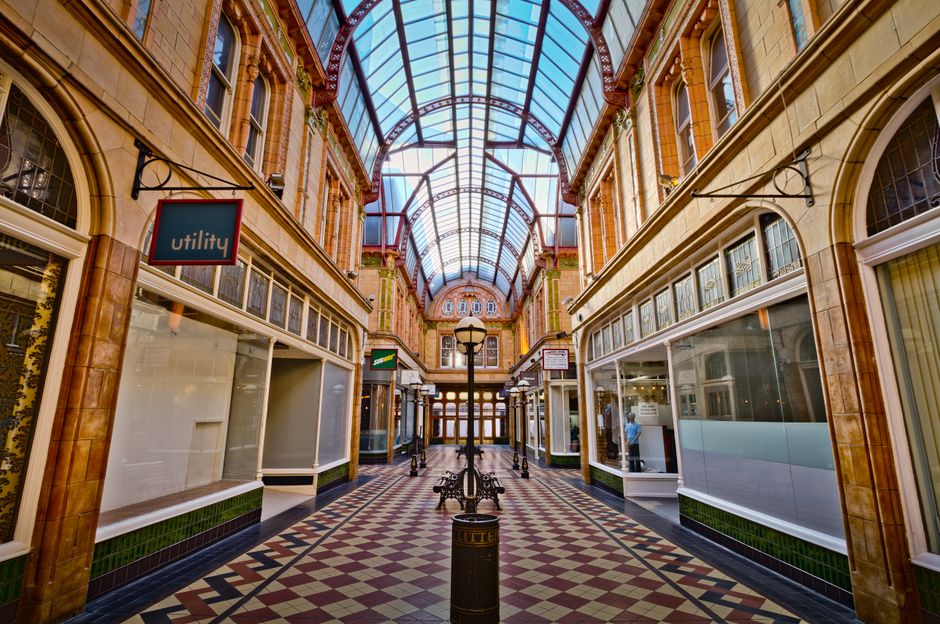
The closure of Hudson’s Bay stores has become an early test of how landlords convert lost anchor tenants into higher-value space. Primaris held approximately 881,400 square feet of former Hudson’s Bay space across its portfolio, and by June said 84 per cent had been leased or was in advanced negotiations, with 58 per cent covered by long-term leases. The financial upside is significant: 608,500 square feet under committed or conditional leases is projected to generate about $9.2 million in annual net rent, compared with $2.1 million previously collected from Hudson’s Bay. Across the full 881,400 square feet, projected annual net rent reaches roughly $14.9 million versus $3.7 million under the department store. Primaris expects to spend between $175 million and $225 million redeveloping the space, targeting yields above 10 per cent, and has already committed $19 million to convert former Hudson’s Bay space at Galeries de la Capitale into a multi-tenant retail and dining complex.
Retailers are moving quickly to absorb the newly available square footage. TJX Canada’s off-price banners — Winners, Marshalls and HomeSense — have been expanding into malls and urban centres to capture share left by Hudson’s Bay’s exit, while Canadian Tire has been repurposing large-format retail space under its Destination Sport concept.
Beyond Malls: Other Major Transactions
The dealmaking extends past Primaris. Montreal-based Leyad acquired a portfolio of properties occupied by Loblaw in what the company described as Canada’s largest retail real estate transaction of the year, according to CoStar. In Western Canada, Westcliff re-entered the market by acquiring the 880,049-square-foot Kingsway Mall in Edmonton, citing the city’s demographics as a driver of the investment. Landlords are also reinvesting in existing assets to adapt to changing dining habits, including a $49.5-million food court redevelopment underway at Promenades St-Bruno.
Consumer Backdrop Remains Mixed
The wave of investment is unfolding against a cautious but resilient consumer environment. Statistics Canada reported retail sales surpassed $74 billion in June, with e-commerce sales up nearly 10 per cent, while the broader economy posted 0.8 per cent real GDP growth in the second quarter of 2026, driven by household spending and business investment. At the same time, the Consumer Price Index rose 3.0 per cent year-over-year, led by gasoline and travel costs, with food price inflation remaining a pressure point for grocery and restaurant tenants. Despite that uncertainty, expansion has continued elsewhere in the sector, with outdoor retailer Arc’teryx pursuing plans to grow its North American store count from 75 to approximately 200 locations — one more indicator that, even amid tighter household budgets, landlords and retailers are continuing to place long-term bets on physical retail space across Canada.
This article references reporting from: