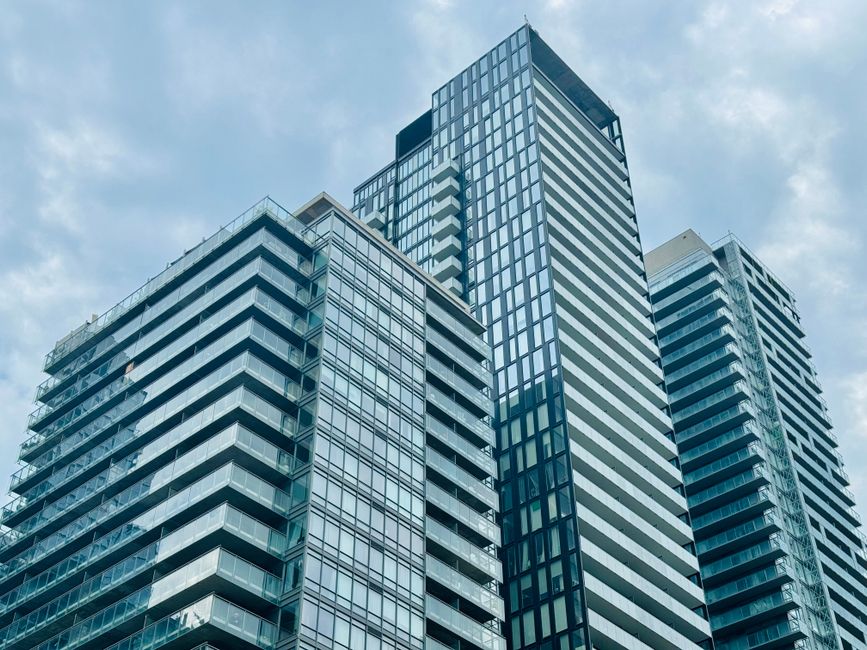
As Canada’s overall housing market shows tentative signs of stabilizing in 2026, the condominium segment is proving to be the weak link, with oversupply, cautious buyers and a wave of investor-driven sell-offs weighing heavily on prices and sales pace in major cities.
National forecasters at RBC describe a market moving gradually from correction toward recovery, with home resales and benchmark prices expected to keep falling this year before rebounding in 2027. But that broader narrative masks a sharper divide within the market itself, one increasingly defined by property type. Condos, especially smaller units, are being singled out by economists and agents as the drag holding back a fuller recovery.
Condos Bear the Brunt of the Slowdown
In the Greater Toronto Area, the divide is stark. Toronto Regional Real Estate Board figures show GTA sales slipped 1.3 per cent in August from July, breaking a five-month streak of improving sales, while the average price fell 2.7 per cent year-over-year to $993,410 — the second time this year the average has dropped below $1 million. New listings jumped 5.2 per cent month-over-month even as they fell 14.1 per cent from a year earlier.
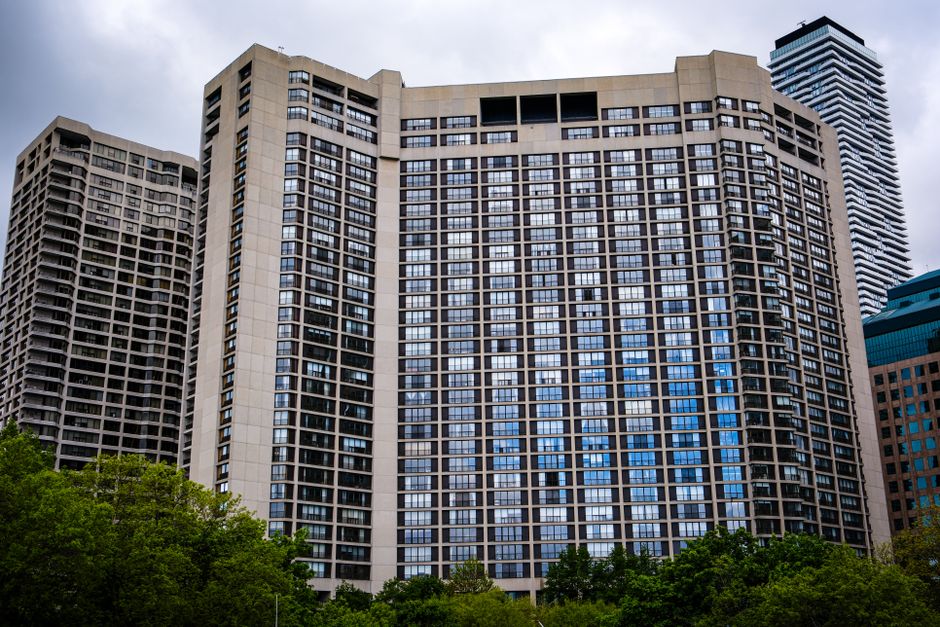
Data from digital real estate platform Wahi shows how much condo-heavy pockets are dragging down those averages. While family-friendly neighbourhoods with move-in-ready houses sold in as little as 10 days in July — led by Alderwood in Etobicoke — homes in luxury and condo-dense areas like Chaplin Estates in midtown Toronto sat for an average of 77 days. Wahi economist Ryan McLaughlin said the GTA is “being dragged down by the condos,” describing many smaller units as “shoebox apartments” that are “really struggling” amid a large volume of new condo supply hitting the market.
In Toronto’s Humber Bay Shores, real estate agent Luke Dalinda of Royal LePage Real Estate Services said active listings climbed to 239 heading into the Labour Day weekend, up from around 197 in the spring. Only 50 units sold in August, and 40 of those went for less than $800,000. Dalinda said owners of larger suites are increasingly waiting out the uncertainty created by the Canada-U.S. trade dispute, with some planning to hold off selling for two or three years. Investors who bought smaller “shoebox” units, by contrast, often can’t afford to wait, he said, adding that he’s also seeing more power-of-sale listings as lenders step in. In one case cited by the Globe and Mail, a lakefront condo in Toronto only found a buyer after 399 days on the market and repeated price cuts.
Supply Pipeline Problems Compound the Issue
The softness in condo resales is intertwined with a slowdown in new construction. The Canada Mortgage and Housing Corporation says the country still needs between 417,000 and 469,000 new housing units per year over the next decade to restore pre-pandemic affordability by 2036, even as the actual pace of building is expected to fall well short — closer to 231,000 units annually at current trends. Housing starts totalled 131,851 through the first seven months of 2026, down four per cent from the same period last year.
CMHC deputy chief economist Aled ab Iorwerth said “new construction is slowing faster than demand,” warning that Canada risks underbuilding just as demand eventually strengthens. The agency specifically flagged weak condominium presale conditions and high construction costs as reasons developers are hesitant to launch new projects. In Toronto, the report said construction has weakened “sharply,” particularly in the condo segment, even as the city’s overall supply gap has narrowed thanks to lower prices. Montreal is seeing a similar pattern, with strong overall construction levels but supply concentrated in rental housing while weak condo output limits ownership options. Vancouver’s gap has stayed roughly stable, Calgary’s has narrowed sharply amid record construction, and Edmonton remains the only major market without a supply gap.
Broader Market Backdrop and Interest Rates
The condo struggles are unfolding against a backdrop of a stabilizing but fragile national market. RBC projects Canadian home resales will fall 3.6 per cent to 453,200 units in 2026, with the benchmark price index down 2.3 per cent to $794,200, before both metrics turn modestly positive in 2027. The bank pointed to pent-up demand, with headship-rate analysis suggesting formation of more than 400,000 households may have been suppressed since 2019, as a potential driver of recovery, alongside near-25-year-high savings rates among prospective buyers.
The Bank of Canada has held its key interest rate at 2.25 per cent for a fourth consecutive decision, with Governor Tiff Macklem citing uncertainty tied to Middle East developments and unresolved Canada-U.S. trade talks. In Calgary, realtor Brian Van Vliet said the rate hold would have limited market impact, noting sales there dropped 16 per cent year-over-year in August even as buyers gained more negotiating leverage.
McLaughlin said the condo correction may not be finished. “It’s not over yet for the condos,” he said, suggesting the market’s trajectory will hinge on whether a wave of currently under-construction units gets absorbed before conditions can be described as having “finally suffered enough.”
This article references reporting from: