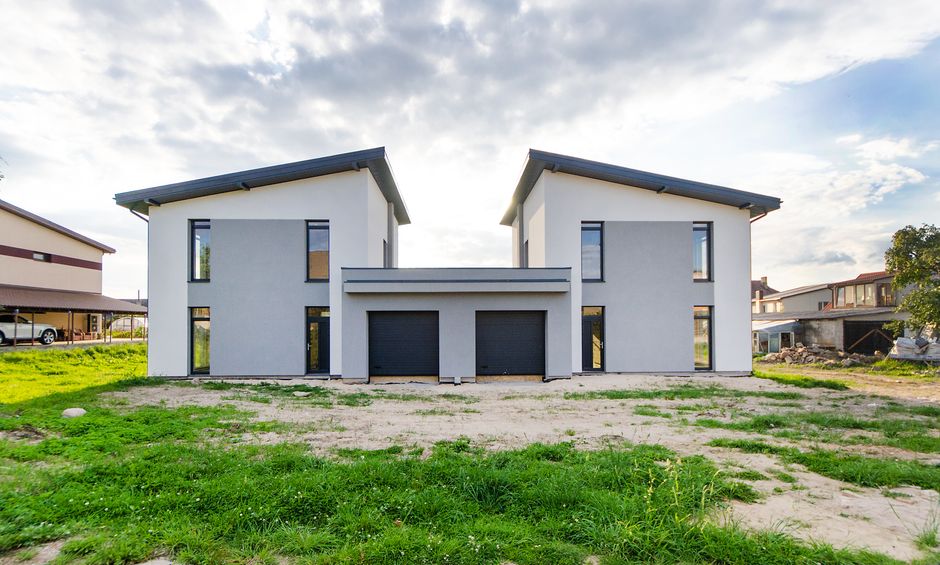
Canada’s push to build more homes is colliding with two stubborn obstacles: municipal regulation that keeps a lid on new supply, and water and sewer systems in many communities that simply cannot handle the growth governments are demanding. Even as federal money and private capital flow into new development, industry groups and researchers say the country’s housing shortage will not ease until both problems are addressed together.
The scale of the affordability problem is well documented. According to a Macdonald-Laurier Institute analysis by Anthony De Luca-Baratta, the average Canadian home price rose from $163,524 in 2000 to $718,400 in 2025, a 339 per cent increase, while general inflation over the same period was only 55 per cent. The piece cites Canada Mortgage and Housing Corporation research finding that for every 10 per cent increase in regulatory restrictiveness in a city’s land-use rules, home prices climb by 14 per cent. The C.D. Howe Institute, cited in the same analysis, estimates that a single-detached home in Toronto costs about $350,000 more to buy than to build, even allowing for a 17 per cent profit margin; in Vancouver the gap is estimated at $1.3 million, and in British Columbia municipalities such as Abbotsford-Mission, Kelowna and Victoria it ranges from $255,000 to $415,000.
Infrastructure Bottlenecks Slow Approved Projects
Even where municipalities have sped up approvals, many are discovering that pipes and treatment plants can’t keep pace. A Financial Post investigation found that more than 11 per cent of Canada’s water and wastewater infrastructure was in poor or very poor condition in 2022, representing an estimated $107 billion in replacement value, according to the 2025 National Infrastructure Assessment. Tim Tierney, president of the Federation of Canadian Municipalities, which represents more than 2,200 municipalities, said infrastructure capacity is now the top obstacle members report, adding that governments “sped up our processes, but now we can’t get the infrastructure.”
In Winnipeg, the North End Sewage Treatment Plant is undergoing a multibillion-dollar upgrade, but Lanny McInnes, chief executive of the Manitoba Home Builders’ Association, said the existing system has only about four years of remaining capacity, with expanded wastewater capacity not expected until 2032. McInnes said development has already been effectively restricted in surrounding municipalities such as East St. Paul, where some builders have finished one phase of a project but cannot proceed to the next. North of Calgary, the city of Airdrie is using roughly 97 per cent of the water and wastewater capacity allocated to it for 2026 and is now developing a priority system that would rank housing behind schools, health care and emergency services when allocating remaining capacity — even as a $114-million pipeline expansion connecting Airdrie to Calgary’s treatment system moves ahead, which the province says could support up to 45,000 new homes. Toronto’s Black Creek trunk sewer, tied to roughly 63,000 planned homes, and Ontario’s Waterloo Region, where developers now compete for limited wastewater allocation, illustrate similar constraints elsewhere, Tierney said.
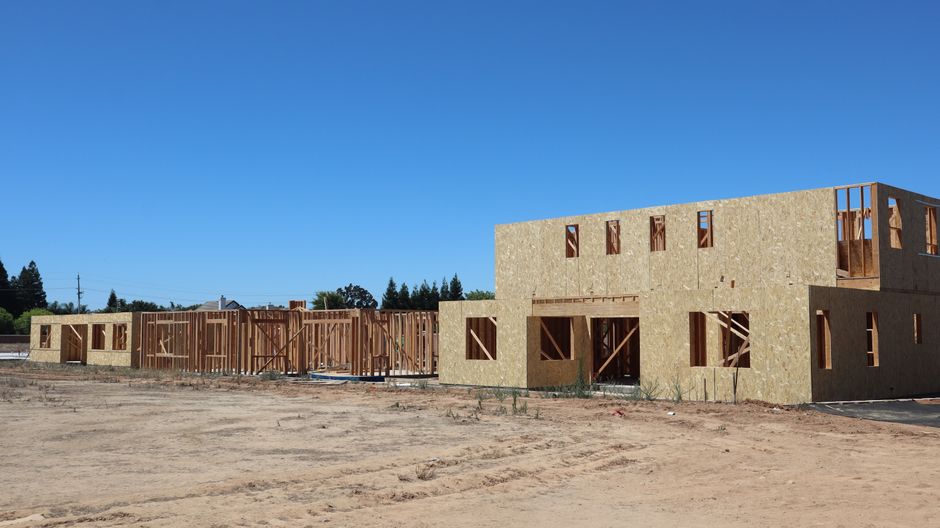
The Federation of Canadian Municipalities estimated in 2023 that each new home requires about $107,000 in municipally owned capital assets on average, including roughly $39,000 for potable water and wastewater infrastructure alone — costs municipalities have traditionally tried to recover partly through development charges on new construction.
Ottawa’s Crown Corporation Bet
The federal government has taken its own steps to address supply. Build Canada Homes, established as a special operating agency in September 2025 and converted into a Crown corporation on July 7, 2026 under legislation that received Royal Assent that June, was allocated an initial $13 billion over five years in Budget 2025, according to a Dentons analysis of the program. Of that, about $1.5 billion is earmarked for the Canada Lands Company to support housing on federally owned land, while the remaining $11.5 billion is directed toward affordable housing projects, including $1 billion for supportive and transitional housing, $1.5 billion for the Canada Rental Protection Fund to preserve at-risk affordable rental buildings, and $1.7 billion for housing in urban, rural and northern Indigenous communities. The agency has since formed partnerships with the cities of Toronto and Ottawa and with the Ismaili Council for Canada, and can now transfer federal lands to housing developers without appraisals and at reduced prices.
Canada Housing Development: Key Figures
Private Capital Moves Into Canadian Projects
Against this backdrop, private developers are also expanding their Canadian footprints. Suntex Enterprises announced in September 2026 that it signed a letter of intent covering two Alberta projects — Royal Links, a 134-acre master-planned community in Leduc with 979 planned residential lots, and Meridian — representing a combined $575 million in projected project revenue. The company said the two projects anchor a broader North American development pipeline exceeding $1 billion over the next three to five years, and that it is negotiating the acquisition of an established Canadian real estate development company to build out its local operating capabilities. Land development at Royal Links is scheduled to begin in the fourth quarter of 2026, with the company describing a model in which it aims to participate in ownership, construction, infrastructure and eventual monetization of the same projects.
Taken together, the developments underscore a housing sector where regulatory reform, federal financing, municipal infrastructure spending and private investment are all advancing at once — but not always in sync, as officials in Winnipeg, Airdrie and elsewhere continue to grapple with capacity limits that zoning changes alone cannot solve.
This article references reporting from: