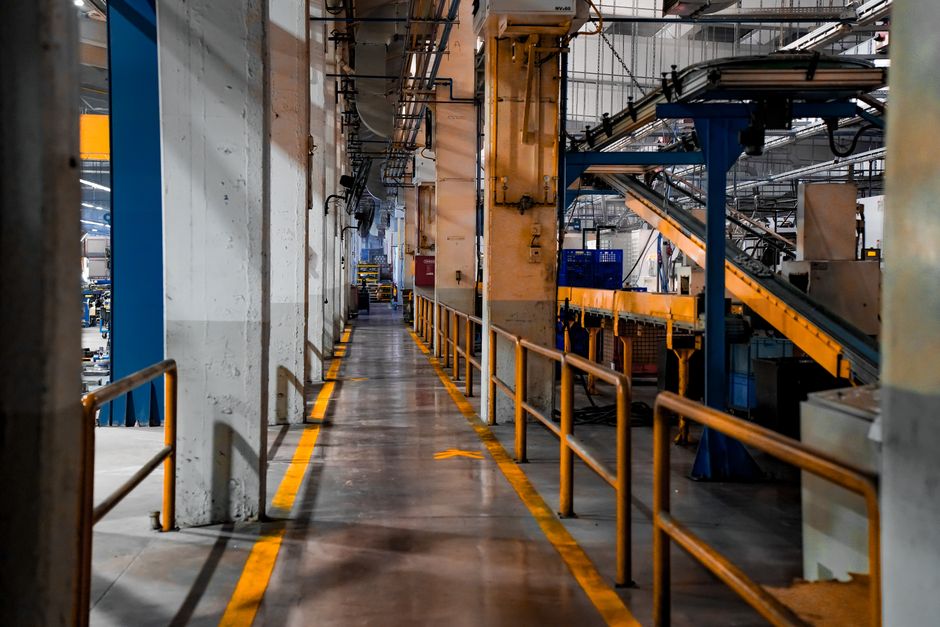
Stelco Holdings is laying off as many as 500 steelworkers in southern Ontario as it winds down a major portion of operations at its Hamilton plant, with the company pointing to the toll taken by the U.S. trade war on Canada’s steel industry.
In a memo to staff obtained by The Globe and Mail, Paul Simon, president and general counsel at Stelco, said the company will shut down its cold-rolled and coated operations at Hamilton Works around Oct. 9. He described the move as “an unfortunate but necessary action to ensure survival of Stelco” in what he called a challenging and unsustainable steel market.
Simon said up to 500 employees across both Hamilton and Lake Erie Works could be affected, attributing the layoffs to what he termed prolonged injury to Stelco’s business from unsustainable steel imports into Canada.
Union Confirms Hundreds of Job Losses
Ron Wells, president of United Steelworkers Local 1005, said the closure of the cold-rolled section of the Hamilton plant will result in 350 layoffs. “It’s tough news. It’s devastating,” Wells said, adding that the timing is difficult with the holiday season approaching.
Pat Persico, senior director of corporate communications for Cleveland-Cliffs Inc., Stelco’s U.S. parent company, told The Globe and Mail that the company plans to concentrate its steel production at Lake Erie Works in Nanticoke, Ont., south of Hamilton. She said total tonnage of steel produced will not change, but the product mix will shift toward a higher concentration of hot-rolled steel.
Persico said many of the Hamilton employees affected by the layoffs will be offered positions at Lake Erie Works. “We expect that a significant number of employees affected by the indefinite idle at Hamilton should be absorbed at Lake Erie Works,” she said. Wells confirmed that 46 job opportunities have so far been offered to workers at the Hamilton cold-rolled plant facing layoffs.
Tariffs Reshaping Canada’s Steel Sector
Canada’s steel industry has been under pressure since the United States imposed a 50 per cent tariff on Canadian steel imports on Aug. 22 last year, a move that has largely shut Canadian steelmakers out of the American market.
In the staff memo, Simon said that while federal government measures have helped reduce overall steel imports into Canada, import volumes remain high enough that Stelco cannot bridge the gap created by the trade crisis.
Since the tariffs took hold, federal and provincial governments have introduced a series of measures to support the steel sector, including hundreds of millions of dollars in direct funding, tighter enforcement against the dumping of foreign steel into Canada, and requirements that publicly funded projects use Canadian steel where possible.
Lourenco Goncalves, chairman and chief executive of Cleveland-Cliffs, said on a July earnings call that more support was needed from government. “Stelco is still lagging,” he said, warning that without further measures to protect fair trade in Canada, “the future competitiveness of our galvanizing lines in Hamilton is at risk.” Goncalves has previously voiced support for the Trump administration’s steel tariff policies, saying in an earlier call that Cleveland-Cliffs was thankful for “the courage to implement these tariffs.”
Political Reaction and Company Background
Ontario Premier Doug Ford has previously criticized Stelco’s ownership over its handling of the trade dispute, accusing the company’s chairman of supporting U.S. tariffs on Canadian steel on multiple occasions.
Cleveland-based Cleveland-Cliffs acquired Stelco in 2024 in a deal valued at about $3.4 billion.
Stelco Layoffs by the Numbers
This article references reporting from: