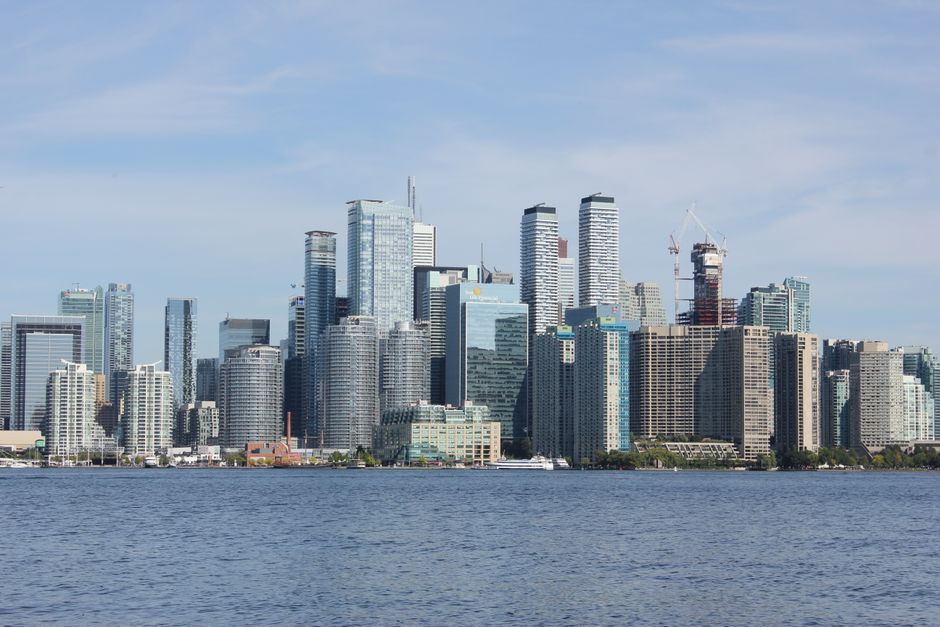
Canada’s largest pension funds have signalled a significant strategic shift toward domestic investment, committing nearly $100 billion in new capital to Canadian assets as part of a broader push unveiled at the inaugural Canada Investment Summit in Toronto this September.
The centrepiece of the pension sector’s commitments is the $50-billion Maple Fund, a joint venture between Canada Pension Plan Investment Board (CPP Investments) and Brookfield Asset Management. Under the arrangement, each partner will contribute up to $25 billion in equity over an initial five-year period to back critical infrastructure and strategic industry projects across the country. CPP Investments chief executive John Graham said Canada is entering “a period of new ambition to advance major projects and build for the future, creating compelling investment opportunities across the country,” adding that the fund combines CPP’s capital and long-term horizon with Brookfield’s origination and development capabilities. Brookfield CEO Connor Teskey said the fund reflects “a shared commitment to investing in the country’s future” and could help drive a generational investment program.
Teachers, PSP and Sun Life Add to the Tally
Other major institutional investors followed with their own commitments. The Public Sector Pension Investment Board (PSP Investments) said it will increase its Canadian investments by 30 to 40%, adding $25 billion domestically to bring its total Canadian holdings to $100 billion. The Ontario Teachers’ Pension Plan pledged an additional $10 billion in Canadian opportunities across public and private markets by the end of 2027. Sun Life Financial committed $5 billion over five years toward critical infrastructure, including digital technology, energy and transportation.
These pension and insurer commitments arrived alongside nearly $325 billion in new financing pledges from Canada’s largest banks — including $150 billion from TD Bank over five years, more than $100 billion from Scotiabank, and $70 billion from BMO over a decade — plus more than $14 billion from investment funds such as Power Sustainable and Radical Ventures. Altogether, the Prime Minister’s Office said the two-day summit generated nearly $500 billion in new investment commitments toward a stated goal of catalyzing $1 trillion in investment over five years.

Why Pension Funds Are Looking Home
The summit, hosted by Prime Minister Mark Carney in partnership with CPP Investments and PSP Investments, brought together roughly 100 global investors — according to CBC reporting — including BlackRock chairman Larry Fink, Blackstone president Jon Gray, and sovereign wealth fund executives from Norway, Abu Dhabi, Singapore and Saudi Arabia. Organizers distributed a 66-page prospectus outlining 167 projects worth more than US$425 billion, according to Be Giant, spanning conventional and clean energy, mining and metals, marine and port infrastructure, digital technology, advanced manufacturing and transportation.
Jeremy Kronick, president and CEO of the C.D. Howe Institute, said the gathering represented a welcome shift in tone after years of Canada struggling to attract large-scale investment, citing long project turnaround times and permitting uncertainty as recurring deterrents. A CPP Investment Insights Institute report surveying 65 global institutional investors found Canada ranked highest among developed countries for stability and regulatory predictability, though regulatory complexity and permitting timelines remained significant concerns, particularly for mining and energy investors.
Pension Fund and Institutional Commitments at the Canada Investment Summit
Scale of the Projects on Offer
The projects pitched to investors varied enormously in size and sector. Be Giant reported the smallest proposal came from EDM Resources in Halifax, seeking US$25 million for a lead and zinc mine in Nova Scotia, while the largest came from the Port of Churchill in Manitoba, seeking roughly US$57 billion (reported elsewhere as a roughly $79-billion expansion) to become a year-round shipping hub. Other headline projects included a $35-billion pipeline from Alberta to the B.C. coast and the $28.5-billion Ksi Lisims LNG terminal.
Frank McKenna, deputy chair of TD Securities and a former Canadian ambassador to the U.S., told Be Giant that “Canada is opening itself up for business investment at a scale that nobody else on the planet is right now,” pointing to an unusually high number of attractive investible assets.
Not all reaction was favourable. Federal NDP Leader Avi Lewis criticized the summit as an effort to “save this country by selling it off,” and a counter-summit protest was organized by groups arguing the government risked auctioning off public resources to outside investors. Rotman School of Management economics professor Walid Hejazi noted that foreign capital carries varying degrees of risk, since some investors seek heavier control over the strategic direction of the assets they fund.
What Comes Next for Real Estate and Industry
Analysts cautioned that the practical impact of the commitments will take time to materialize. Avison Young’s Marie-France Benoit said the summit signals Canada’s trade diversification strategy “moving from vision to execution,” but added that regulatory and tax changes may still be needed to clear chronic development impediments. Colliers Canada head of research Adam Jacobs said industrial real estate could see the biggest near-term demand increase from nation-building projects, with potential spillover into office, retail, legal, engineering and finance services as projects progress from pledges toward construction.
This article is for informational purposes only and does not constitute financial, investment, or legal advice. Consult a licensed financial advisor before making investment decisions.
This article references reporting from: