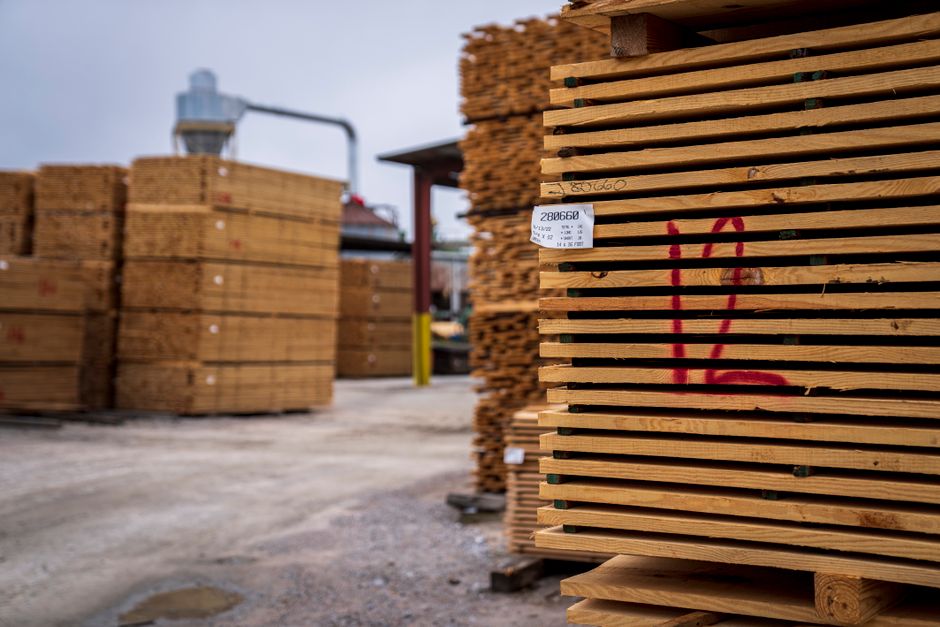
United States President Donald Trump has again suggested Canada should become the 51st American state, telling a rally crowd in Bullhead, Arizona, that annexation is the only way the cross-border relationship can work. The comments came as the White House finalized a 35 per cent tariff on Canadian softwood lumber, a measure economists cited in the report say will hurt Canadian forestry mills while raising costs for American home builders.
In Washington, United States Commerce Secretary Howard Lutnick accused Prime Minister Mark Carney of deliberately derailing trade talks to gain political advantage ahead of upcoming provincial elections. United States Ambassador to Canada Pete Hoekstra separately warned Ottawa to stay out of next month’s American midterm elections. In response to the rising tensions, Ottawa issued a new travel advisory warning Canadians to expect greater scrutiny and a higher risk of detention at the border.
Prairie Leaders Brace for a Long Dispute
Alberta Premier Danielle Smith told audiences the trade standoff is unlikely to be resolved soon, warning it could last another eight to nine months. The uncertainty is being felt acutely in the border city of Lloydminster, where residents face both Alberta’s Oct. 19 independence referendum and the broader trade turmoil. TD Economics noted that higher crude prices, driven by Middle East tensions, remain a net positive for Canadian oil revenues, even as other parts of the Prairie economy struggle.
A mid-year report from Farm Credit Canada found that while food and beverage manufacturing sales appear higher, sales volumes are flat, with growth driven entirely by inflation. The report urged companies to pursue market diversification and push for the removal of inter-provincial trade barriers.
Processors Describe Frozen Investment, Contract Disputes
Terry Tyson, president of Grain Millers in Yorkton, said the uncertainty is freezing longer-term capital investment decisions across the Prairies. He said the company continues to invest in Yorkton, including capital projects aimed at diversifying into value-added products, but said the unpredictability makes five-year planning far more difficult and has a negative effect on investment overall.
Mike Popowich, owner of TA Foods in Yorkton, said the indecision and uncertainty surrounding tariffs has affected the business and industry more than anything else at this stage. He said neither his company nor its customers know from month to month, or even over an 18-month stretch, whether new tariffs will be imposed, which has made clarifying contract terms over who bears tariff costs a central focus — something he said the company had never had to worry about before.
Some See Opportunity Amid the Disruption
Ross Guenther, president of Northern Nutrients in Saskatoon, said current conditions are not ideal for pursuing a large expansion but said businesses have to find ways to work through the disruption. He said the company is focused daily on finding ways to move forward despite the difficult environment.
The effects are also being felt south of the border. In North Dakota, congressional candidates spent much of a recent debate addressing the difficulties facing local farmers due to disrupted export links with Canada.
This article references reporting from: