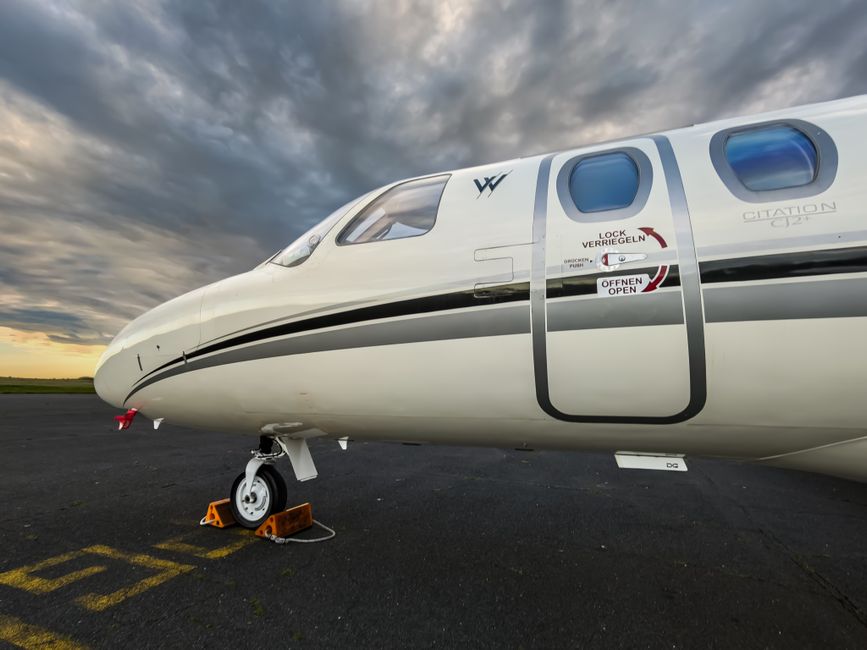
U.S. President Donald Trump indicated at a campaign rally in Kansas that he will not follow through on earlier threats to restrict Bombardier Inc.’s business in the United States, saying he had only recently learned that the Montreal-based plane maker has operations in the state.
Speaking Monday night at a rally near Wichita meant to boost Republican Senator Roger Marshall ahead of the U.S. midterm elections, Trump repeated his claim that Canada is “ripping off” the United States on trade. He also said he would let Canada keep its anthem and hockey if it became the 51st state. Without naming Bombardier directly, Trump said that because of a phone call from Marshall, he would be “helping a certain air company get themselves straightened away,” adding that he had previously viewed the company as Canadian but now understood it has a presence and jobs in Kansas.
Wichita is home to a major Bombardier plant and the company’s U.S. headquarters. Bombardier announced last week it plans to invest US$50-million in Wichita, including a new learning centre to train aircraft technicians and mechanics, as part of a broader commitment to expanding the site. The company currently employs 1,500 people in the city.
Past Threats Against the Planemaker
Trump’s comments come after weeks of public criticism of Bombardier. Last month he wrote on social media that the company’s products “aren’t good enough” and floated banning its jet sales in the U.S. unless it built aircraft domestically, accusing it of “treating America like a piggy bank.”
In January, Trump accused Canada of unfair trade practices and said the U.S. would decertify all Canadian and Bombardier-made jets unless Transport Canada approved aircraft made by Gulfstream Aerospace Corp., Bombardier’s main U.S. competitor based in Georgia.
The remarks have come as Canada-U.S. trade relations remain strained following the collapse of bilateral negotiations in August, a standoff marked by tariffs, retaliatory tariffs and import bans.
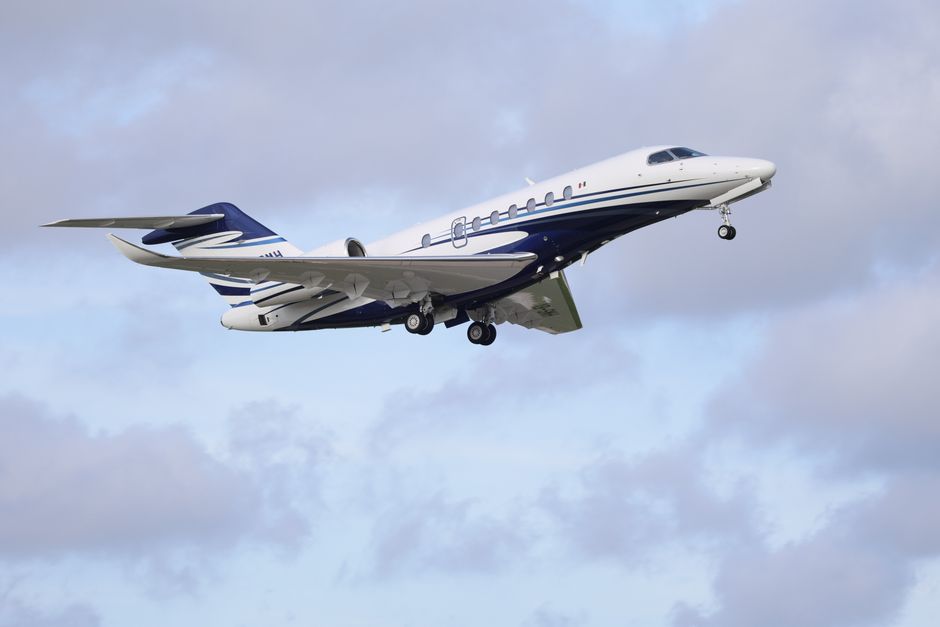
Kansas Lawmakers and Bombardier Respond
Both of Kansas’s Republican senators have raised concerns with the White House about Trump’s attacks on Bombardier, citing the company’s footprint in their state. Senator Marshall wrote on social media in September that Bombardier should expand its Kansas operations further, noting that America buys more than half of what the company sells and that more of its planes should be built domestically. He recalled that the Wichita facility, previously known as Learjet, once employed well over 3,000 people.
Bombardier spokesman Mark Masluch said Tuesday the company’s Kansas workforce is growing, pointing to its recent investment announcements and newly opened North American Learning Center as supporting high-skilled jobs for years to come.
Asked why Trump appears focused on the company, Bombardier chief executive officer Éric Martel pointed to its rivalry with Gulfstream and its strong U.S. sales, noting that more than half of Bombardier’s production volume is sold into the U.S. market, including to wealthy individuals and corporations. “I guess he hears about our planes all the time,” Martel told a business audience in Toronto in late September. “We’re top of mind.”
Bombardier’s U.S. Footprint
Bombardier has responded to Trump’s previous threats by emphasizing its contribution to the U.S. aerospace industry. The company says it directly employs 3,500 workers across more than 20 states and supports thousands more American jobs through a network of 2,800 suppliers. Among its major U.S. suppliers are engine makers GE Aerospace and Honeywell Aerospace, along with Parker Aerospace, Collins Aerospace and GKN Aerospace.
This article references reporting from: