
Canadian households are paying more for home and auto insurance as inflation, extreme weather and rising claims costs ripple through the property and casualty insurance sector, according to data from Statistics Canada, Ratehub.ca and the Insurance Bureau of Canada (IBC).
Auto insurance premiums for passenger vehicles rose 5% year over year as of September 2026, according to Statistics Canada’s Transportation Consumer Price Index, while home and mortgage insurance rose 4.9% over the same period, per the Shelter Consumer Price Index. Both increases outpaced Canada’s overall inflation rate of 3.1% in September 2026, which remains above the Bank of Canada’s 2% target.
Claims Costs and Weather Driving Up Prices
According to Ratehub.ca, rising premiums reflect both a growing number of claims and the rising cost of paying them out. The firm notes that 2025 was the tenth costliest year on record for severe-weather-related insured losses in Canada, totalling more than $2.4 billion. Inflation in building materials and labour has pushed up the cost insurers must pay to settle home claims, while vehicle theft continues to strain auto insurers: Équité Association’s First Half of 2026 Auto Theft Trend report recorded 20,759 vehicles stolen in the first half of 2026, a 10.1% decrease from a year earlier, though average claim costs for stolen vehicles exceeded $28,000 in 2025.
The U.S. imposition of 25% tariffs on vehicles and parts is also expected to add further pressure on auto insurance costs, Ratehub.ca said, as manufacturers and repair shops face higher costs for parts that are ultimately passed on to consumers.
Provincial differences are significant. Alberta saw the largest year-over-year increase in auto insurance premiums, at 22.8%, while British Columbia, where ICBC is the sole public auto insurer, saw no increase. Saskatchewan’s public insurer SGI recorded a 4.4% increase. For home insurance, Saskatchewan, Nova Scotia and Newfoundland posted the steepest increases, at 9.2%, 8.7% and 8.1% respectively.
When a Claim Costs You Your Policy
Beyond rising rates, claims history itself is becoming a flashpoint for consumers. Fleur Dsouza, an insurance expert with Lowestrates.ca, said a single home insurance claim can raise premiums by 20 to 22% over five years, while two claims in that period can push rates up by 30%. Some insurers will decline to renew a policy altogether after two claims within five years, regardless of the size of those claims.
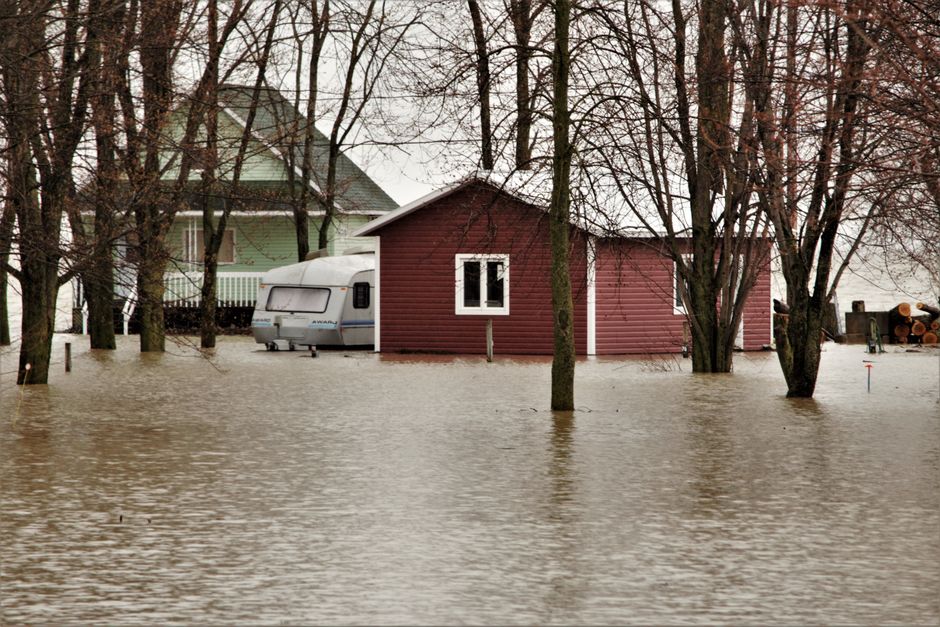
That was the experience of Christine Buechler of St. Thomas, Ont., who filed an $18,000 claim after a sewer back-up flooded her basement, having previously claimed $4,000 for a lost hearing aid three years earlier. Her insurer cited “frequency of claims” in declining to renew her policy, and she said she called 10 to 15 companies before finding new coverage, with her premiums ultimately doubling. Dsouza said home insurance “is there to protect you for sure, but it is there for bigger losses,” suggesting many policyholders may want to weigh whether smaller losses are worth filing a claim over, given the potential hit to future rates.
An Industry Bigger Than It Appears
While consumers absorb higher premiums, the P&C insurance industry itself represents a substantial share of the Canadian economy. IBC’s InsurEconomy 2026 report puts the sector’s direct contribution to GDP at nearly $32 billion in 2025, with total economic impact — including indirect and induced effects — exceeding $53 billion. The industry supported an estimated 361,000 jobs and contributed more than $17 billion in federal and provincial taxes and levies, while insurers held more than $35 billion in government bonds, down from almost $39 billion reported in 2022 data.
The report also highlighted workforce composition, finding women made up 67% of employees at P&C brokerages and 61% at insurance companies in 2025, compared with 47% across all industries nationally.
IBC vice-president of federal affairs Liam McGuinty said the industry “continues to be a stabilizing factor for the Canadian economy, helping Canadians recover from disaster, and protecting households and businesses from economic shocks.” The report repeated IBC’s policy priorities, including a national solution on earthquake risk, stronger resilience measures against severe weather, and more coordinated P&C regulation. IBC and the C.D. Howe Institute have separately pointed to an 81% rise in P&C regulatory compliance costs, to $753 million over two years, and estimated Canadian insurers spend roughly 17% of operating costs on compliance versus 6.5% for European insurers.
What Consumers Can Do
Ratehub.ca said rate increases typically take effect at renewal rather than mid-policy, since premiums are fixed for the term of a policy. The firm suggested consumers compare quotes across providers, consider higher deductibles, review coverage for unneeded extras, and seek available discounts to offset rising costs. Analysts at Ratehub.ca said the pace of premium increases should moderate as inflation continues to ease, though costs are expected to keep rising through 2026 given ongoing claims pressures.
This article is for informational purposes only and does not constitute financial, investment, or legal advice. Consult a licensed financial advisor before making investment decisions.
This article references reporting from: