A Québec-based company is trying to determine whether hydrogen can be produced more cheaply by tapping into underground rock rather than relying on traditional water-splitting technology, though the project still has to clear its first production milestone.
Vema Hydrogen is running a pilot project in Thetford Mines, a region long associated with asbestos mining, to test its approach to hydrogen production. In an interview with Energi Media, chief financial officer Stéphane Dallaire said the company hopes to obtain hydrogen from the ground within the coming months, but stressed that commercial production remains a goal rather than an established operation.
Electricity Costs Remain a Barrier
Dallaire, who previously worked on an earlier green hydrogen venture, said electricity costs are one of the biggest obstacles facing hydrogen producers that use electrolysis, a process that separates water into hydrogen and oxygen using electric current. To illustrate the challenge, he described a scenario in which electricity priced at five cents per kilowatt hour, combined with consumption of 60 kilowatt hours per kilogram of hydrogen, would result in an electricity bill of three dollars per kilogram — a figure that does not include other production or delivery costs. Dallaire characterized this as an illustrative example rather than a verified cost estimate for any specific facility.
He added that incentives remain important for narrowing the price gap between hydrogen produced through electrolysis using clean electricity and hydrogen produced from fossil fuels. Electricity prices also factor into whether industrial customers are willing to switch fuel sources at all. Economist Chris Bataille, speaking in an earlier Energi Media interview about industrial electrification, noted that steelmakers could potentially alternate between natural gas and electricity-based hydrogen depending on the cost of clean power available to them.
A Different Extraction Method
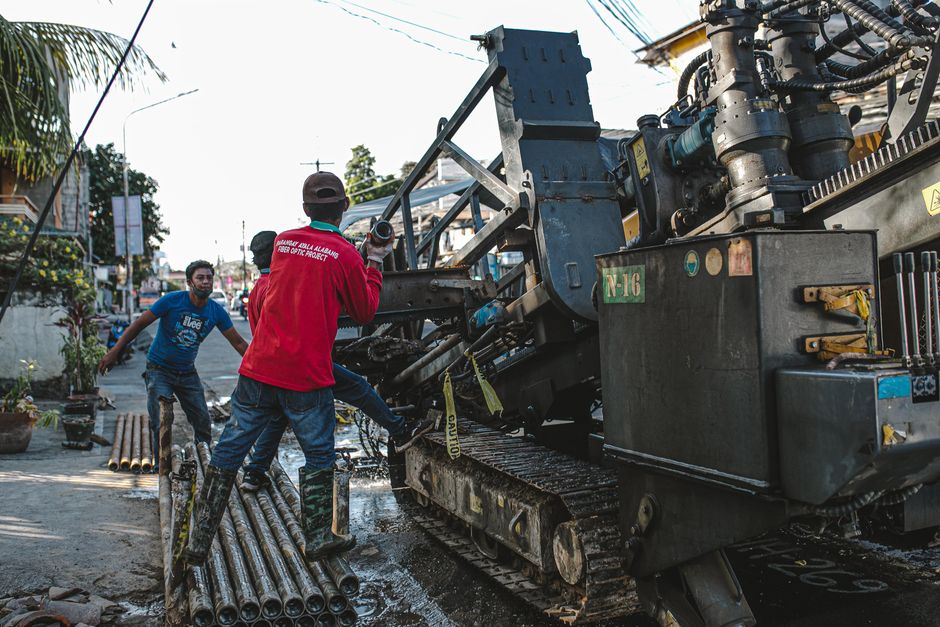
Vema’s approach differs from conventional electrolysis. According to Dallaire, the company drills into rock formations considered suitable for the process and uses water, pressure and a catalyst to speed up reactions that release hydrogen underground. He said the method still requires energy to heat water and maintain pressure, but avoids the electrolysis step of splitting water molecules directly.
Vema CEO Pierre Levin previously described the company’s progress in an earlier Energi Media interview, saying laboratory testing on rock samples had shown evidence that economically meaningful amounts of hydrogen could be produced, and that the company was now moving from lab testing to in-situ testing at the Thetford Mines site. Those results reflect the company’s own account of its lab work; Dallaire’s later interview did not point to a demonstrated commercial production cost, a sustained flow rate, or an independently verified emissions footprint tied to the pilot.
Finding Customers Close to the Source
Beyond production costs, Dallaire said transportation presents another challenge for hydrogen developers generally, since moving the gas over long distances adds expense and complexity. He said this favours producing hydrogen close to where it will be used, which is part of why Vema is interested in industrial activity near its Thetford Mines site. He pointed to synthetic aviation fuels, methanol production and smaller industrial applications as potential markets, and also mentioned data centres as a possible customer base, though no completed commercial supply arrangement was announced during the interview.
Hydrogen also faces competition from direct electrification in some sectors. Columbia University energy researcher Anne-Sophie Corbeau said in a January 2025 Energi Media interview that heavy-duty transport in particular has seen battery and electricity-based solutions catch up to hydrogen in recent years, though her comments addressed hydrogen’s broader market position rather than Vema’s specific project.
Dallaire framed the Thetford Mines pilot as a chance to bring new economic activity to a region previously known for mining, citing available land and resources tied to former mining operations as well as support from municipalities and other agencies. For now, the immediate task is demonstrating that hydrogen can be produced from the pilot site at all. Turning that into a viable business would still require dependable output, delivered costs that can compete with existing options, and customers prepared to commit to the supply.
This article references reporting from: