On Tuesday, in Vancouver, Prime Minister Mark Carney stood before cameras to call the final investment decision on LNG Canada’s Phase 2 expansion a “historic investment” in Canadian energy. Nine time zones away, the gas that will eventually flow from Kitimat, B.C. remains years from reaching a single Asian customer. But the money is now real: Shell Canada Energy and its four international partners have committed to a project that will double the terminal’s export capacity, add two new processing trains, and, according to the companies, push Canada toward becoming one of the world’s top five LNG exporters. It is also, on the numbers laid out by the companies and government themselves, a bet made in a considerably more crowded and uncertain global gas market than the one Phase 1 was built for.
What Was Actually Approved
LNG Canada, a joint venture led by Shell (40 per cent) alongside Petronas (25 per cent), PetroChina (15 per cent), Mitsubishi Corporation (15 per cent) and Korea Gas Corporation (5 per cent), confirmed the final investment decision on Phase 2 of its Kitimat facility. The expansion will lift the plant’s output from 14 million tonnes per annum (mtpa) to 28 mtpa, according to LNG Canada and multiple government statements. Commercial operations are targeted for the early 2030s.
The price tags vary slightly depending on the source but tell a consistent story of scale: the Toronto Star reported the original Phase 1 build cost more than $40 billion, one of the largest private-sector investments in Canadian history, while Phase 2 alone is expected to cost more than $20 billion, with pipeline upgrades pushing the total to an estimated $33 billion. Offshore Energy pegged the Phase 2 cost at approximately C$33 billion (US$23.25 billion), while federal minister Tim Hodgson described the whole megaproject as representing $32 billion in private capital. In a companion move, TC Energy said it would nearly double the capacity of the 670-kilometre Coastal GasLink pipeline that feeds the terminal, adding five new compressor stations.
The Politics of Speed
The announcement was carefully staged as proof of concept for Ottawa’s newly aggressive approach to permitting. LNG Canada Phase 2 was referred to the federal Major Projects Office roughly a year ago. “Twelve months from referral to final investment decision is the pace that this pivotal moment in Canada’s history demands,” Carney told the news conference, adding that “high standards don’t require slow decisions.”
That framing has its skeptics. Heather Exner-Pirot of the Macdonald-Laurier Institute noted that Coastal GasLink was built from the outset with capacity reserved for a second phase, meaning the expansion “was kind of always a matter of time” rather than purely a product of Ottawa’s new machinery. She credited the Carney government’s tax measures, including accelerated capital cost deductions, with likely sweetening the deal, alongside surging global demand for LNG since the war in Iran began. Conservative Leader Pierre Poilievre offered a similarly double-edged endorsement, welcoming the news while noting the project’s permit dates back a decade and blaming “bad Liberal policies” for the delay in construction.
Lance Mortlock, managing partner at EY Canada, said the partners weighed three questions before committing: whether Asian demand was sufficient (a “resounding yes”), whether Canada’s gas reserves could sustain the plant for decades, and whether Canadian public policy gave them enough comfort. On that last point, he said the Carney government’s major-projects push and investment tax incentives “has got to play a role in the corporate boardrooms of Europe.” The legal architecture behind that push includes the Build Canada Act, passed last year, and the Build Canada Strong Act now before Parliament, which grant Ottawa power to override laws such as the Species at Risk Act for projects designated in the national interest.

Who Stands to Gain
Government and project proponents estimate the expanded facility could generate more than $50 billion in public revenues over its operating life. LNG Canada CEO Chris Cooper said Phase 2 would create up to 4,000 construction jobs in Kitimat at peak, another 2,100 building the new pipeline compressor stations, and roughly 90 full-time plus 150 contractor positions once the expanded terminal is running.
One of the more significant beneficiaries is a group of five B.C. First Nations. The investment decision locked in a $1-billion equity stake for MNT Investments — representing the Gitga’at, Gitxaała, Haisla, Kitselas and Kitsumkalum nations — to purchase the facility’s new storage tank, described as one of the largest Indigenous infrastructure ownership transactions in Canadian history. B.C. Premier David Eby, appearing alongside Carney, said there had been “a step change” in federal engagement with the project since Carney took office.
The expansion also arrives amid a broader West Coast energy push. Carney’s government faces a separate, Thursday deadline on whether to fast-track the proposed West Coast Oil Pipeline as a national-interest project — a pipeline in which Canadian taxpayers are positioned to own as much as 45 per cent, alongside a 45 per cent Alberta government stake and 10 per cent held by Pembina Pipeline. Ontario Premier Doug Ford, appearing with Alberta’s Danielle Smith in Calgary, said his province would help finance a related proposal, the Northern Shield pipeline, to move up to 500,000 barrels a day from Hardisty, Alta., to Sarnia, Ont. In British Columbia’s own Oct. 24 provincial election, both the sitting NDP and the opposition Conservatives under Lorne Doerkson are campaigning on ramping up LNG production, with Doerkson pledging to triple output by 2035 and the NDP arguing it already plans to outpace that target. The B.C. Greens, by contrast, are calling for a moratorium on LNG expansion altogether.
The Warning Signs
Not every voice in the room was celebratory. Mark Kalegha, an energy finance analyst with the Institute for Energy Economics and Financial Analysis, cautioned in a new report that Phase 2 “is not simply a duplication/twinning of Phase 1” and faces a markedly different risk environment, including volatility in the price of labour, steel, equipment and debt. He also flagged a potential global supply glut, with roughly 254 mtpa of new competing LNG capacity entering service worldwide between 2026 and 2030 and spot-market trading expected to exceed 35 per cent of the market. Kalegha noted that Shell and Mitsubishi are reportedly reviewing their stakes in the project, adding that “the shift in ownership — with core members of the original consortium reducing their stakes at a critical time when new capital is needed — raises questions.”
Doubling the terminal’s throughput will require roughly 4.2 billion cubic feet of natural gas a day, which analysts warn could tighten Western Canadian gas supply, push up Alberta’s benchmark prices, and squeeze producer margins.
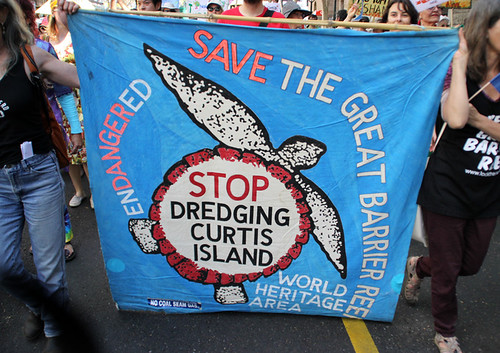
Environmental and Indigenous opposition has not gone away either. Wet’suwet’en Hereditary Chiefs and the Union of British Columbia Indian Chiefs, who led protests against the original Coastal GasLink build, have vowed to renew opposition to any pipeline expansion and have warned banks and pension funds against investing. Alex Walker of Environmental Defence called the project “a mistake,” pointing to gas flaring at the existing terminal that has already exceeded permitted volumes. Richard Brooks of Stand.earth was blunter still: “Expanding malfunctioning LNG Canada is like betting on a concrete canoe at a sailing regatta,” he said, arguing that global gas demand destruction is already underway regardless of government ambitions. Nichole Dusyk of the International Institute for Sustainable Development warned that Phase 1 alone is on track to receive at least $1.36 billion in public support by 2030, adding that “LNG Canada Phase 2 is putting Canada’s climate goals on the back burner for little public benefit and substantial taxpayer risk.” On emissions, the B.C. government has said Phase 1 produces more than four million tonnes of greenhouse gases annually — equivalent to roughly 900,000 cars — while Dusyk cited a figure of 2.1 megatonnes of CO2 equivalent a year, comparable to 450,000 cars, underscoring how contested even the baseline numbers are.
A Familiar Canadian Pattern
LNG Canada’s expansion is not happening in isolation. It lands alongside a broader national appetite for enormous, decade-spanning energy infrastructure bets. In Ontario, the Ford government’s 2023 plan to nearly double the Bruce nuclear plant’s capacity by adding up to 4,800 megawatts — enough, it said, to power almost five million homes — drew similar warnings about cost, timeline and risk allocation. University of Toronto nuclear engineering professor Roger Newman called that project “sensible” provided it stayed on schedule, while Greenpeace Canada’s Keith Stewart compared new nuclear construction to “shopping for a VCR because you want to watch movies,” arguing renewables could be built faster and cheaper. York University’s Mark Winfield said the Bruce plan emerged “out-of-the-blue” with insufficient public discussion of costs and liabilities for taxpayers and ratepayers — a critique that echoes almost verbatim what Dusyk and the IEEFA’s Kalegha are now saying about LNG Canada Phase 2. Both projects share a defining feature of Canadian megaproject politics: governments moving quickly to greenlight capital-intensive, multi-decade energy bets while the ultimate cost, and who bears it, remains only partially settled at the moment of announcement.
Our Take
The headline economics here are genuinely striking — a $33-billion private-sector commitment, a billion-dollar Indigenous equity stake, and a prime minister eager to point to a 12-month permitting timeline as proof his “one project, one review, one year” doctrine works. But in our view, the more interesting question raised by the sources isn’t whether Canada can build LNG Canada Phase 2 — clearly, it can — it’s whether it’s building it into a market that will still want it by the early 2030s. Kalegha’s warning about 254 mtpa of competing global capacity arriving before this facility even opens, combined with reports that Shell and Mitsubishi may be trimming their own exposure, is not a minor footnote; it’s a signal from inside the consortium itself that Phase 2’s economics look less certain than Phase 1’s did.
We’d also flag the pattern Ottawa keeps repeating: fast-tracking legislation, tax sweeteners, and national-interest designations are being deployed simultaneously across a fossil pipeline, an LNG terminal, and — in Ontario’s case — a nuclear buildout, each justified as a one-off nation-building moment. Taken together, they represent a consistent government wager that public backstops and accelerated approvals can de-risk projects that private capital, on its own, might price more cautiously. That wager may pay off handsomely for the Kitimat region, the five First Nations now holding equity in the storage tank, and the thousands of tradespeople who’ll build it. Whether it pays off for the broader taxpaying public depends on variables the sources themselves say are unresolved — global gas prices in the 2030s, the pace of the energy transition, and how much of that $1.36-billion-and-counting in public support ultimately gets recovered. Those are the numbers worth watching as this project moves from announcement to actual construction.
This is a Commentary piece: analysis and editorial perspective from Canadian Business News, clearly distinguished above from the reported facts it’s based on. It is not financial, investment, or legal advice.
Sources