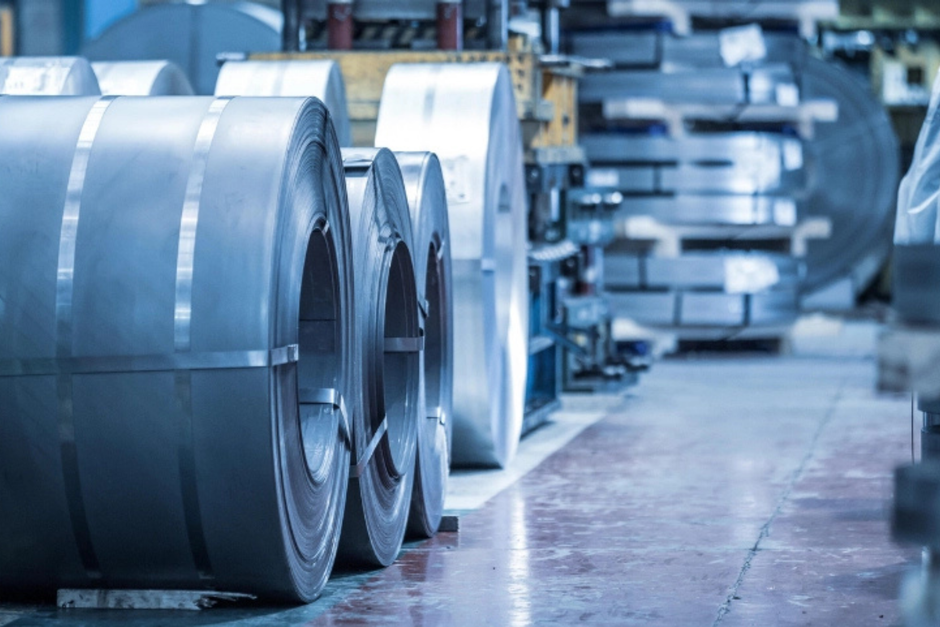
Canada’s steel industry is facing a turbulent stretch, with U.S. tariffs, a flood of cheap imports and hundreds of layoffs raising questions about its future — though some industry voices see a path forward through the domestic market.
This week, Cleveland-Cliffs, parent company of Stelco, announced it was idling the company’s cold mill and coating lines in Hamilton effective Oct. 9, putting up to 500 workers at risk of layoff. The company pointed to market conditions, including 50 per cent U.S. tariffs and falling global steel prices, as reasons for the indefinite pause.
The news came in the same week that U.S. President Donald Trump announced plans for a new $15 billion steel facility in Iowa, to be built by a Minnesota-based company controlled by India’s Essar Group. That plant is slated to begin production in 2030.
Domestic Demand Seen as Key
Despite the pressures, Peter Warrian, a distinguished research fellow at the University of Toronto’s Munk School of Global Affairs and Public Policy, said the industry’s midterm outlook is reasonably good, with the main challenge being how to manage the transition. He said growth in domestic demand — whether through infrastructure projects or high-tech manufacturing — will be essential.
Warrian noted the international steel market has been flooded with cheap Chinese steel, while the U.S. market, which has traditionally absorbed more than 70 per cent of Canadian steel production, may remain difficult to access even after Trump leaves office. He cautioned against assuming a Democratic sweep in upcoming U.S. elections would quickly reverse current trade policies. He also pointed to gaps in Canadian production of specialized steel used in military or advanced manufacturing applications as an area that needs to be addressed.
Union Calls for Tighter Import Quotas
Marty Warren, head of the Canadian branch of the United Steelworkers union, agreed the domestic market is critical but said protecting it might require revisiting some trade agreements signed by Prime Minister Mark Carney as part of efforts to diversify export markets.
Warren said only about 30 per cent of the steel used in Canada is actually produced domestically, with the rest coming from cheaper imports from countries including China, Germany and South Korea. He argued that global overproduction means Canadian steel cannot compete outside North America, making protection of the domestic market essential to the industry’s survival.
Last July, the federal government introduced an aid package for the steel sector that included caps on imported steel, tariffs for exceeding those caps, and a push to prioritize Canadian steel in government procurement. Warren said the caps remain too generous, since countries with existing free trade deals with Canada can export up to 75 per cent of their 2024 volumes before hitting the limit. He called for that threshold to be lowered to 20 per cent.
A spokesperson for federal Industry Minister Melanie Joly said the government is supporting Canadian steel companies and workers through targeted loans, procurement policies and new initiatives aimed at further limiting foreign steel imports.
Uncertainty Over Iowa Plant
Joseph McDermid, director of the Steel Research Centre at McMaster University, cautioned that construction has not yet begun on the proposed Iowa facility, and the plant will not be fully built or operating before Trump’s term ends in January 2029, leaving room for circumstances to change. He noted that Canada, including Stelco, continues to produce significant volumes of steel.
Warren said maintaining a domestic steel industry is important not just economically but for the country’s broader independence.
This article references reporting from: