
Canada’s home prices have fallen 20% and thousands of newly built condominiums sit unsold in major cities, but the head of the federal government’s housing agency says this downturn is the right moment to accelerate construction, not pause it.
Ana Bailão, chief executive officer of Build Canada Homes, said the agency’s mandate does not change with market cycles. She said the country needs more supply overall, with a particular focus on purpose-built rental apartments rather than investment-oriented condos. “We don’t work in the cycle. We know that the country is going to need more housing,” she said, describing the agency as a practical organization focused on getting construction underway to improve affordability.
Prime Minister Mark Carney established Build Canada Homes after his election last year, aiming to bring the federal government back into financing homebuilding directly, reversing a retreat from affordable housing construction that began in the 1990s.
Financing Amid a Downturn
Bailão is attempting to get projects moving at a time when higher interest rates and a cap on immigration have contributed to one of Canada’s most significant housing corrections, prompting developers to shelve projects as new condo units go unsold.
Her agency has access to $13 billion in government funding and offers flexible financing tools, working with municipalities, provinces and private developers, while also freeing up federally owned land for development. So far, it has committed funding toward about 19,000 affordable units, with roughly 2,300 of those currently under construction. The agency defines a unit as affordable when total shelter costs require no more than 30% of a household’s gross income. By comparison, Canada Mortgage and Housing Corp. estimates the country needs between 1.9 million and 2.4 million additional homes over the next decade to restore affordability to pre-pandemic levels.
Bailão acknowledged that the broader construction slowdown has affected her organization as well, but said Build Canada Homes received more than 900 proposals from builders and other proponents over the past year, and has financed private-sector projects that otherwise would not have secured funding, including a 600-unit rental development in Vancouver. She said the housing correction reinforces the need for the agency’s work.
The Condo Conversion Debate
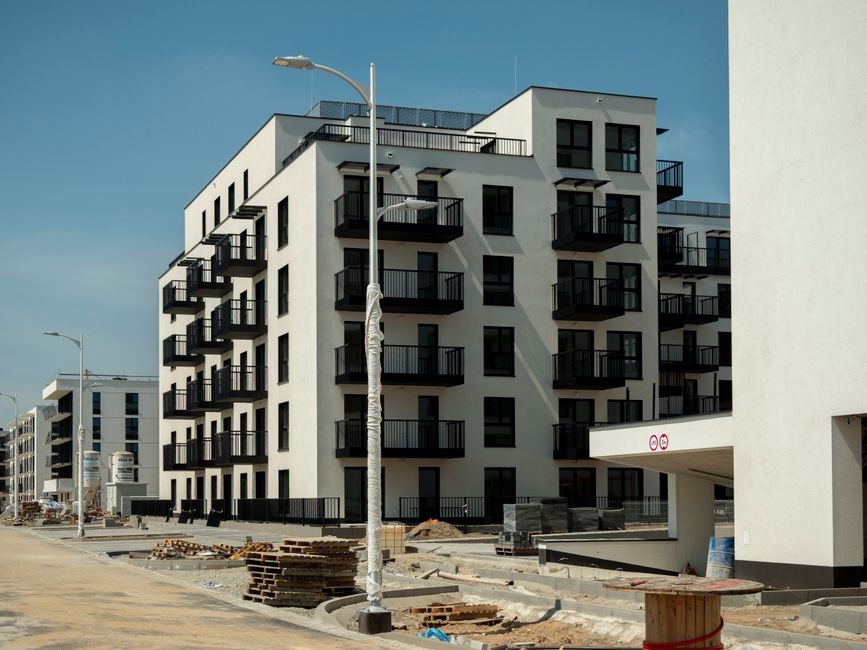
With large numbers of newly built condos unsold in Toronto and Vancouver, converting some of that supply into affordable housing has been floated as a potential fix. A June proposal from the British Columbia and federal governments to acquire and convert roughly 2,200 such units drew criticism, with some calling it a “developer bailout.” Asked about the status of that plan, Bailão said only that the partnership with British Columbia’s government continues to be developed and that details would be announced at the appropriate time.
The condo market’s slowdown has coincided with a shift toward purpose-built rental housing, which now accounts for two-thirds of all apartment starts in key markets, supported by government financing programs, reduced development charges and zoning changes. CMHC data shows this shift has helped ease rental market pressure, with vacancy rates rising and rent growth slowing after years of shortages.
Ownership Affordability Still a Concern
Construction of condos and other “ground-oriented” homes, including detached houses, multiplexes and townhomes, has weakened considerably. These types of housing have traditionally served both as ownership opportunities and a source of secondary rental supply. As a result, Canada continues to face affordability challenges in the ownership market, and younger Canadians may still face barriers to buying, with the benchmark price of a Toronto home standing at $924,600.
Benjamin Tal, deputy chief economist at Canadian Imperial Bank of Commerce, said the adjustment in the condo market is necessary despite short-term pain. He said it would likely push out undercapitalized developers he described as “Mickey Mouse developers,” and that most future condo buyers would be families rather than investors, which he said would lead to construction of larger units instead of smaller ones.
This article references reporting from: