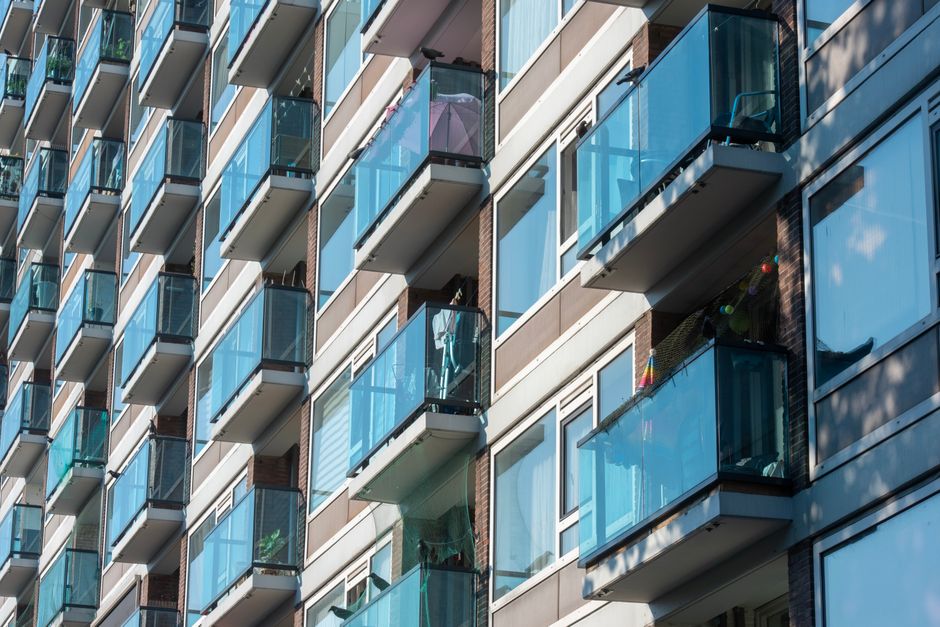
Canada’s rental market is sending mixed signals heading into the fall of 2026, with national average asking rents falling for a second straight year even as some provinces post increases and a growing share of households report being unable to afford adequate housing.
According to a monthly analysis from Rentals.ca and Urbanation, average asking rents across the country dropped 4.8 per cent year-over-year as of August 2026, continuing a two-year decline. Yet Nova Scotia has bucked that trend entirely, overtaking British Columbia in May as the province with the highest average asking rents for apartments and condos. Landlords’ average ask in Nova Scotia reached $2,356 in August, up 3.1 per cent from a year earlier and a title the province has now held for four straight months.
Why Nova Scotia Rents Keep Climbing
In Halifax, a roughly 500-square-foot one-bedroom unit near Dalhousie University was recently listed at $1,750 a month, with comparable units going for $2,000 or more. Five years ago, that same price would have covered a two-bedroom — the average one-bedroom asking rent in September 2021 was $1,574, and $2,041 for a two-bedroom.
“Nova Scotia rents have risen every year since 1990, but the pace has really stepped up sharply since 2019,” said Rentals.ca spokesperson Giacomo Ladas, who pointed to construction lagging roughly 70 per cent behind the national average due to rising land, permitting and labour costs.
Advocates say provincial rental rules are also a factor. Mark Culligan, a community legal worker at Dalhousie Legal Aid Service, said Nova Scotia’s system of fixed-term leases — which do not automatically renew — combined with a five per cent rent increase cap gives landlords strong incentive to turn over units between tenants rather than renew at capped rates. That cap is notably higher than British Columbia’s 2.2 per cent and Ontario’s 1.9 per cent caps set for 2027.
Ownership concentration compounds the pressure. A Dalhousie Legal Aid report, “Who Owns Halifax,” found that just 20 landlords own 56 per cent of roughly 1,400 large rental properties representing more than 50,000 units in the Halifax area, with financial firms alone controlling nearly a quarter of units. Separate Statistics Canada research on 2022 data found Nova Scotia was the only one of six provinces studied — alongside New Brunswick, Prince Edward Island, Ontario, Manitoba and B.C. — where institutional investors, rather than individuals, owned the largest share of investment properties, accounting for 38 per cent of assessed rental property value.
Tariffs Pressuring Rents in Industrial Cities
Elsewhere, the Rentals.ca and Urbanation report found a measurable link between U.S. tariff exposure and falling rents. Oshawa, Ont., exposed through the auto sector, saw average rents fall nearly 11 per cent over the past year, while Windsor — also auto-exposed but constrained by thinner rental supply — saw a smaller 2.4 per cent drop. The report identified Calgary, Windsor, Kitchener-Cambridge-Waterloo, Brantford, Guelph, Hamilton, Trois-Rivieres, Lethbridge, Thunder Bay and Oshawa as the most tariff-exposed rental markets, compared with lower-exposure cities including Vancouver, St. John’s, Saskatoon, Halifax, Victoria, Regina, Winnipeg, Nanaimo, Kamloops and Greater Sudbury.
The report tied the pressure to job losses in exposed sectors — Statistics Canada recorded 27,200 manufacturing job losses in Ontario and 40,600 nationally tied to tariffs in 2025 — alongside rising construction material costs that are complicating new rental supply. Structural steel prices have risen 7.2 per cent since the first quarter of 2025, the analysis found, a particular concern for highrise-heavy markets like Toronto and Vancouver.
Affordability Gaps Persist Despite Softer Prices
Even where rents are easing, affordability challenges remain widespread. The Canadian Housing Survey, released by Statistics Canada, found 23.2 per cent of households nationally were living in housing they could not afford in 2024, up from 22 per cent in 2022. Saskatchewan and Alberta tied for the second-highest rate of “core housing need” at 13 per cent, behind only British Columbia at 15.7 per cent. In Saskatchewan, Regina recorded 13.5 per cent and Saskatoon 12.9 per cent. More than one in four Canadian households — 27.9 per cent — reported financial difficulty due to rent or mortgage increases in the past year, up from 22.6 per cent in 2022.
“A lot of the people that are coming through our doors and applying for housing, their houses are in disrepair,” said Steven Drysdale, director of development at Namerind Housing Corporation in Regina, describing overcrowded homes with failing bathrooms and kitchens.
Canadian Rental and Housing Affordability Snapshot
In Toronto, the Toronto Regional Real Estate Board reported one- and two-bedroom rents down about two per cent year-over-year as of the second quarter of 2026, averaging $2,273 and $3,013 respectively, which the board said is giving renters “substantial choice.” Real estate broker Marco Pedri of Shoreline Realty said current conditions favour both renters and buyers over investors, noting tenants can often secure rent-controlled units at more reasonable prices.
Meanwhile, cities like Edmonton are expanding non-market affordable housing stock directly, growing from 13,500 affordable units in 2019 to more than 20,000 by 2026 — the largest increase since the 1980s, according to the city, which says one in four renter households there are currently in core housing need.
This article references reporting from: