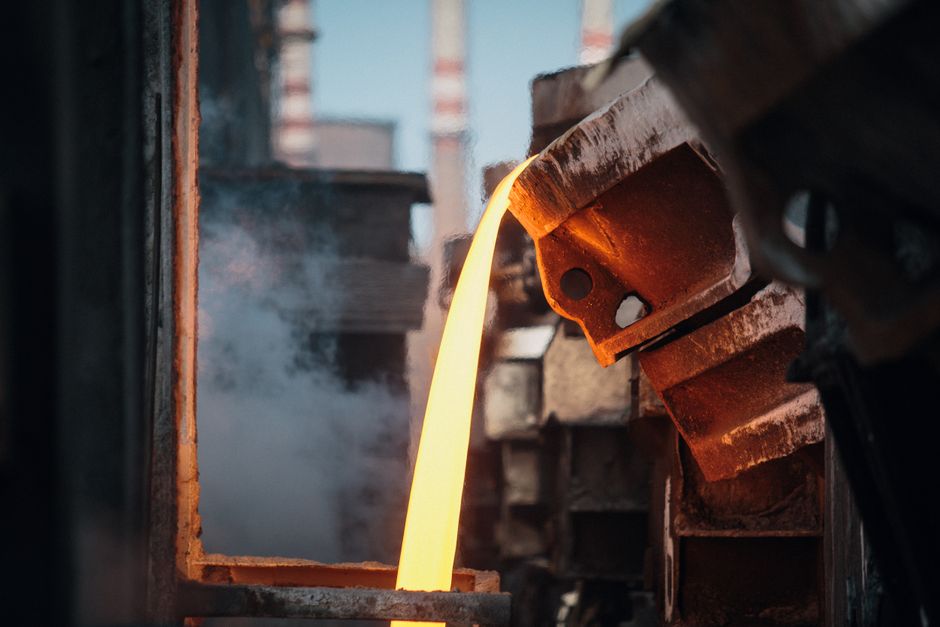
Stelco Inc. has told the federal government it will proceed with hundreds of layoffs at its Ontario operations, rejecting Ottawa’s assertion that the cuts violate commitments the company made when it was acquired by U.S. steelmaker Cleveland-Cliffs Inc.
The Hamilton-based steelmaker announced on Sept. 28 that it would lay off up to 500 workers at its Hamilton and Nanticoke sites, saying it could no longer compete in galvanized steel production because of the trade war with the United States.
When the federal government approved Cleveland-Cliffs’ $3.4-billion acquisition of Stelco in 2024, it attached legally binding conditions requiring the company to maintain at least the same number of unionized employees in Canada for five years, along with most of its non-unionized workforce.
Ottawa’s Ultimatum
On Monday, Industry Minister Mélanie Joly gave Cleveland-Cliffs five business days to produce a plan for complying with its employment commitments under the Investment Canada Act, warning that failure to do so could result in legal action.
In a letter to Joly obtained by The Globe and Mail, Stelco president and general counsel Paul Simon said the company is not in violation of its undertakings, arguing that the commitments do not include a requirement to avoid layoffs or to keep employment above a certain level on any given day during the five-year period.
Simon said the Investment Canada Act’s guidelines have long allowed for non-enforcement or renegotiation of undertakings when circumstances change, pointing to the imposition of a 50-per-cent U.S. tariff on Canadian steel exports as an event outside the company’s control.

Mathis Denis, director of communications for Joly, disputed the company’s position, saying the commitments were legally binding and do not lapse because of shifts in business strategy or market conditions. Denis said the government’s legal team is reviewing Stelco’s letter and that “all options are on the table.”
Union Reaction and Precedent
Ron Wells, president of United Steelworkers Local 1005, said he was disappointed but not surprised that Cleveland-Cliffs is proceeding with the layoffs, and said he wants Ottawa to follow through with legal action. He said he believes the federal government would prevail if the matter went to court.
There is precedent for such a dispute: after U.S. Steel acquired Stelco in 2007 and made similar job and production commitments under the Investment Canada Act, it laid off Canadian workers following the 2008 financial crisis. Ottawa sued, and a settlement was reached in 2011 under which U.S. Steel agreed to a new set of commitments on production levels and investment in Canada.
Simon said laid-off workers at Hamilton Works will be able to apply for openings at Lake Erie Works, though the local union said only 46 positions were available there.
Company’s Position on Trade Policy
Cleveland-Cliffs has said it is prepared to immediately recall laid-off Canadian workers if Ottawa secures a “Fortress North America” trade arrangement with the United States, but has said the government has not done enough to curb foreign dumping of galvanized steel into the Canadian market.
Simon wrote that the government could help by imposing further restrictions on imports of cold-rolled and coated steel products, limiting import substitution, and eliminating remissions for steel products that Canadian producers, including Stelco, can supply.
Simon also pushed back on the government’s suggestion that it was blindsided by the layoff announcement, saying the company had communicated its struggles in the galvanized steel business to Ottawa since July and had discussed possible revisions to its undertakings with the government in advance.
This article is for informational purposes only and does not constitute financial, investment, or legal advice. Consult a licensed financial advisor before making investment decisions.
This article references reporting from: