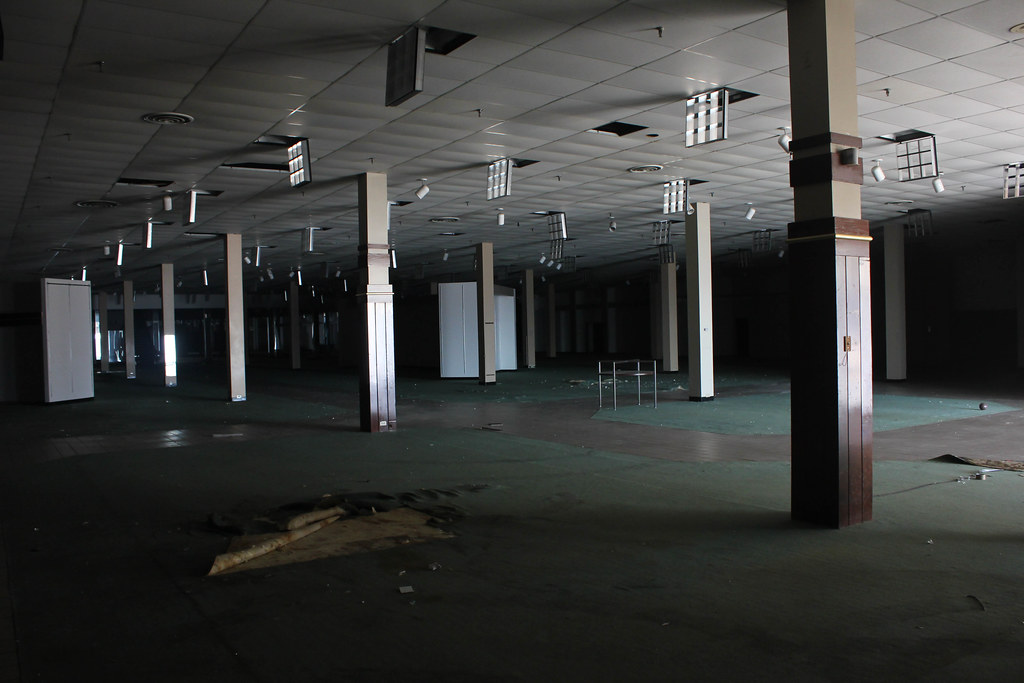
When Hudson’s Bay Company closed its last stores on June 1, 2025, it didn’t just end 355 years of Canadian retail history — it also knocked out a distribution channel that apparel brands had relied on for decades to reach shoppers who would never walk into a standalone boutique. Levi Strauss & Co. was one of those brands, and according to Retail Insider’s reporting, the Bay had been generating tens of millions of dollars in annual sales for the denim giant. More than a year later, Levi’s response offers a case study in how a global apparel supplier rebuilds market access in a country that just lost its last national department store chain.
A Channel Disappears, A Strategy Emerges
Levi Strauss’s own numbers tell part of the story. In fiscal third-quarter results released October 7, the company reported global organic revenue growth of 5%, with wholesale revenue climbing 6% versus direct-to-consumer’s 2% rise. Comparable DTC sales were flat, though e-commerce grew 10%. That wholesale strength — faster growth than the company’s own stores — reinforces just how much Levi’s still depends on outside retail partners to move product, even as it has spent recent years building up its branded and digital presence.
The company has not disclosed how much of its former Hudson’s Bay business has actually been recovered through other channels, a gap that underscores how incomplete the picture still is. What’s clear is that Levi’s isn’t betting on any single replacement. Instead, it’s leaning on a patchwork of existing and newly reinforced relationships spanning value, mid-market and luxury retail.
The Store Network Levi’s Already Had
Levi Strauss entered the post-Bay era with a sizeable physical retail footprint already in place. Independent location-data firm ScrapeHero identified 59 Canadian Levi’s locations as of April 24, 2026 — 20 in Ontario, 17 in Quebec and 10 in British Columbia, together accounting for nearly 80% of the identified network, though that figure is a third-party estimate rather than an audited company count. Branded stores sit in major shopping centres including CF Toronto Eaton Centre, Yorkdale, Square One, CF Chinook Centre, CF Market Mall and Quartier DIX30.

That footprint gives Levi’s more control over merchandising and customer relationships than wholesale typically allows, and it gave the company a head start when the Bay disappeared. In July 2025, Levi’s extended its direct-to-consumer push further by launching its Red Tab membership program in Canada, tying participating stores and digital channels into a single loyalty structure.
Filling the Middle and the Top of the Market
On the mass end, Walmart Canada continues to carry Levi Strauss Signature, the company’s value-oriented line, and that relationship predates the Bay’s closure — it isn’t a replacement so much as a pre-existing hedge that’s taken on new importance. Signature’s performance has been notable: it posted roughly 13% global organic revenue growth during the quarter, according to the company’s results, highlighting how much weight the lower-priced line is now carrying.
Mark’s offers another wholesale touchpoint; Levi’s pointed to an enhanced presence at the retailer’s Queensway location in a November 2024 announcement as an example of its specialty apparel strategy.
At the premium end, Levi’s has pushed into territory the Bay never fully occupied. In June 2025, the company expanded its partnership with Holt Renfrew, bringing curated merchandise and retail activations — including pop-ups in Calgary and Montreal, with additional assortments planned for Toronto and Vancouver. As Retail Insider reported at the time, that expansion followed directly from Hudson’s Bay’s closure and was framed as part of Levi’s effort to strengthen its premium positioning. The company had also moved into specialty retailer HAVEN in late 2024, distributing through its Toronto and Vancouver operations — a line distinct from the mass-market Signature assortment.
The Bigger Vacancy Levi’s Is Operating Inside
Levi’s situation is really one thread in a much larger unraveling. Hudson’s Bay’s closure left Canada without a national department store chain for the first time in generations — Simpsons closed in 1991, Woodward’s in 1993, Eaton’s in 1999, Sears Canada in 2018, Nordstrom exited in 2023, and finally the Bay itself shut down in June 2025. No department store operator has emerged to take its place, per Retail Insider’s one-year retrospective. Hudson’s Bay’s intellectual property — its trademarks, iconic stripes and coat of arms — was sold to Canadian Tire for approximately $30 million, separating the brand name from any actual department-store business.

The real estate fallout has rippled across the country. RioCan REIT disclosed a roughly $141 million stalking-horse bid to buy out Hudson’s Bay’s 50% stakes in Georgian Mall and Oakville Place — about $77.6 million and $63 million respectively — in a joint venture that had been saddled with heavy mortgage debt from lenders including Desjardins, TD Bank and Canada Life. At Bramalea City Centre in Brampton, general manager Andrew Butler told Retail Insider the mall is still working out what to do with its former Bay space, even as Walmart Canada prepares to open a roughly 140,000-square-foot Supercentre in a different vacated anchor box by 2027. Other brands caught in the same wholesale disruption include Ralph Lauren, which had relied on Hudson’s Bay, Sporting Life and Harry Rosen for distribution and has since opened full-priced stores in Toronto and Vancouver, and Saks Fifth Avenue, whose three Canadian stores shut down entirely alongside the Bay’s liquidation, leaving Holt Renfrew as the dominant luxury department-store operator in the country.
Our Take
In our view, Levi’s approach — spreading risk across value, mid-market and luxury wholesale partners rather than chasing a single replacement for Hudson’s Bay — looks like the only realistic playbook available to a supplier of its size in a market that no longer has a national department store. The faster growth in wholesale versus direct-to-consumer sales suggests Levi’s still needs partners like Walmart and Holt Renfrew more than its own stores can currently deliver, even with Red Tab loyalty and e-commerce gains in the mix.
The more interesting question, we think, is whether the Holt Renfrew pop-ups represent a genuine premium repositioning for Levi’s or simply damage control dressed up as strategy — the company’s own disclosures don’t yet show how much of the lost Bay revenue has actually been recaptured, and until that number exists, any declaration of success is premature. For other Canadian landlords and suppliers watching this unfold, the broader lesson is less about Levi’s specifically and more about structural risk: when a company depends heavily on one department-store partner for national reach, as Ralph Lauren did and as Levi’s did, that reach can vanish in a single liquidation process. The retailers filling the resulting vacuum — Walmart’s expanding Supercentre footprint, Holt Renfrew’s uncontested luxury dominance, RioCan’s consolidation of mall ownership — are the clearest winners so far. Whether Canadian consumers end up with a retail landscape that’s genuinely better suited to how they shop now, or just a more fragmented one, remains an open question the industry hasn’t fully answered a year and a half on.
This is a Commentary piece: analysis and editorial perspective from Canadian Business News, clearly distinguished above from the reported facts it’s based on. It is not financial, investment, or legal advice.
Sources