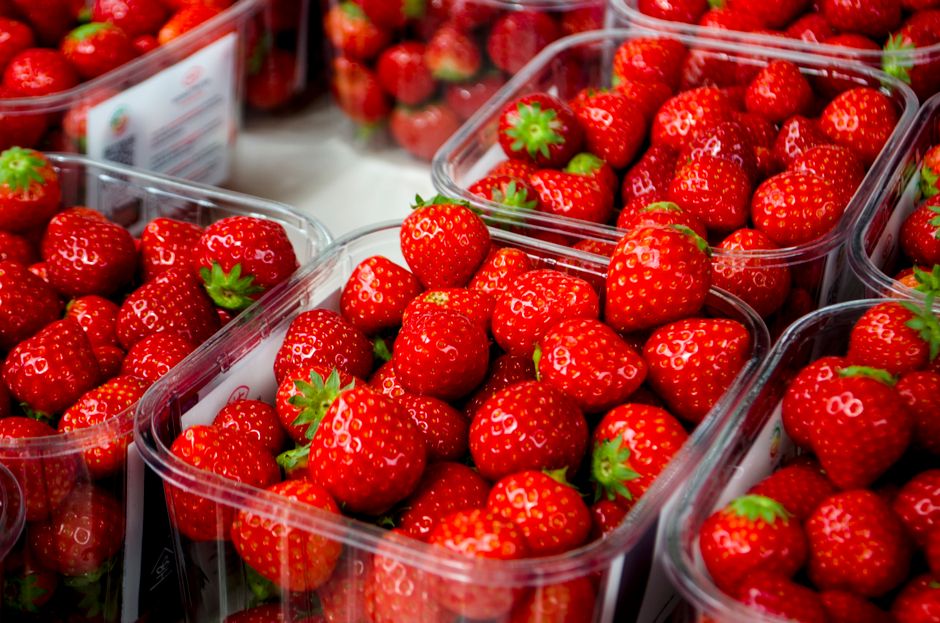
A whistleblower lawsuit filed in California alleges that Driscoll’s, the berry company whose products are widely sold in Canadian grocery stores, shipped millions of pounds of fruit containing pesticide and chemical levels exceeding Canadian safety limits between 2022 and 2024, and then attempted to cover it up.
The lawsuit was filed by David Harada, a California resident and former Driscoll’s manager of food safety and regulatory compliance for the U.S. and Canada. Harada alleges that, by Driscoll’s own estimates, about 50 per cent of all shipments to Canada during that period contained fruit that exceeded Canadian safety levels for pesticides and chemicals.
Harada told CBC News he began noticing problems related to pesticide safety and over-application in 2022 and reported them to his superiors at the time. He said he raised the concerns with upper management but was told it was an issue he would have to manage himself. Harada said he also discussed with his director whether the company had “plausible deniability” regarding the issue.
CFIA Findings and Response
The Canadian Food Inspection Agency confirmed to CBC News that it carried out several inspections of Driscoll’s berries sold in grocery stores across Canada between 2022 and 2024, and found chemical levels above the legal limit. The chemicals identified included the fungicides and insecticides bifenthrin, iprodione and captan.
Despite these findings, the CFIA said the inspections did not result in recalls; instead, corrective actions were implemented and the investigations were closed. Some inspections were triggered by reports of suspected illness after consuming Driscoll’s blueberries or by complaints about chemical taste and smell, though the CFIA said any reported illness could not be definitively linked to the berries.
The agency noted that the cases identified involved different products, pesticide residues, importers and locations over several years, and said the presence of the Driscoll’s brand on products does not by itself establish that non-compliance came from a single producer or source. The CFIA said it takes action depending on the magnitude of the health risk, which can include notifying producers or importers, alerting suppliers, and conducting follow-up inspections. Recalls are issued only if Health Canada determines a product poses an unacceptable health risk.
Assessing the Health Risk
Stéphane Bayen, an associate professor in the department of food science and agricultural chemistry at McGill University, said berries are often found with chemical residues above legal limits, though a single instance of exceeding the maximum residue limit doesn’t necessarily translate into a health risk. He said the concern is ensuring such exceedances don’t become routine.
Toxicologist Daniel Green said the chemical levels found in the CFIA-tested berries would not be enough to make someone sick from eating a small amount — citing one example where a person would need to eat 19 kilograms of the fruit to see an effect. Green said the greater concern is cumulative, lifetime exposure to multiple toxins from food and the environment combined.
Allegations of a Cover-Up
Harada believes the non-compliant berries crossed into Canada after Driscoll’s, in 2022, removed a food safety and compliance tracking system that had been in place for the Canadian market, in order to increase sales. He said the system was designed to ensure enough time passed between the last pesticide application and harvest, allowing chemicals to break down and residues to fall within legal limits.
Harada accused Driscoll’s of wilfully concealing information about the berries’ toxicity levels. He said he told the company that fixing the issue required going public about the violations and potential harms, and issuing recalls. Harada filed his lawsuit alleging unlawful retaliation, saying he believed he was being set up as a “scapegoat” for compliance issues and was retaliated against for raising concerns. He said that although the company asked him to reinstate the tracking system, it did not disclose the issue publicly, and he says he was ultimately pushed to resign.
In a statement to CBC, Driscoll’s said it could not comment on the details of Harada’s employment due to confidentiality issues, but said it “remains confident that the complete factual record will demonstrate that it responded correctly to the concerns Mr. Harada raised, at all times acted in good faith, and at all times conducted itself appropriately.” The company denied removing the food safety tracking system and denied other allegations in the lawsuit, adding it has never knowingly shipped products it believed to be unsafe. Driscoll’s said there will be an appropriate time during litigation to present its own evidence.
This article references reporting from: