A Liberal prime minister who grew up in Edmonton stood before roughly 5,000 people at Calgary’s BMO Centre this week and made an argument that, a generation ago, would have been unthinkable coming from his party: that Alberta’s grievances against Ottawa are real, that the province’s oil wealth should be a point of national pride, and that the only way to protect it is to stay inside Canada. Mark Carney’s pitch, delivered four days before Albertans vote on whether to push the province toward a future independence referendum, is as much an economic argument as a patriotic one — and it is being made at a moment when Canada’s relationship with its largest trading partner is arguably as strained as it has been in decades.
What’s Actually on the Ballot
Monday’s vote, as every outlet covering it has been careful to note, is not a direct referendum on Alberta independence. Albertans are deciding whether to remain a province as-is or to instruct their government to begin the legal process toward a future vote on separation. It’s a procedural step, but a consequential one: Alberta sits atop the world’s fourth-largest proven oil reserves, and a province that supplies that much of the national economy’s energy base choosing to walk toward the exit would reverberate far beyond its borders. Premier Danielle Smith, who called the vote herself, says she wants Alberta to stay — she cast an early ballot for remaining in Canada — but has acknowledged that separatist sentiment is running higher than she’d like. Polling from 338Canada cited by Time magazine put support for remaining in Canada at 75% among Albertans as of October 11, which suggests the province is not on the verge of a majority-separatist outcome, but also means roughly a quarter of the electorate is not where Smith or Carney want it.
Carney’s Argument: Resources, Resilience, and the American Threat
Carney’s framing at the Forever Canadian rally was blunt: “Some outside our borders are working to break us so they can own us.” He didn’t name the United States directly in that line, but he didn’t need to — his remarks landed a day after Donald Trump told a rally crowd in Arizona that Canada will “end up being the 51st state, because it’s the only way it works,” and amid a trade war that has seen negotiations collapse in August and retaliatory tariffs take effect on both sides last month. According to U.S. Trade Representative figures reported by Time, trade between the two countries fell 4.6% from 2024 to 2025 but still totaled $872.3 billion in goods and services, with roughly $2.6 billion crossing the border daily in 2024 — a scale of interdependence that makes any serious rupture, whether through tariffs or territorial politics, consequential for businesses on both sides of the border.
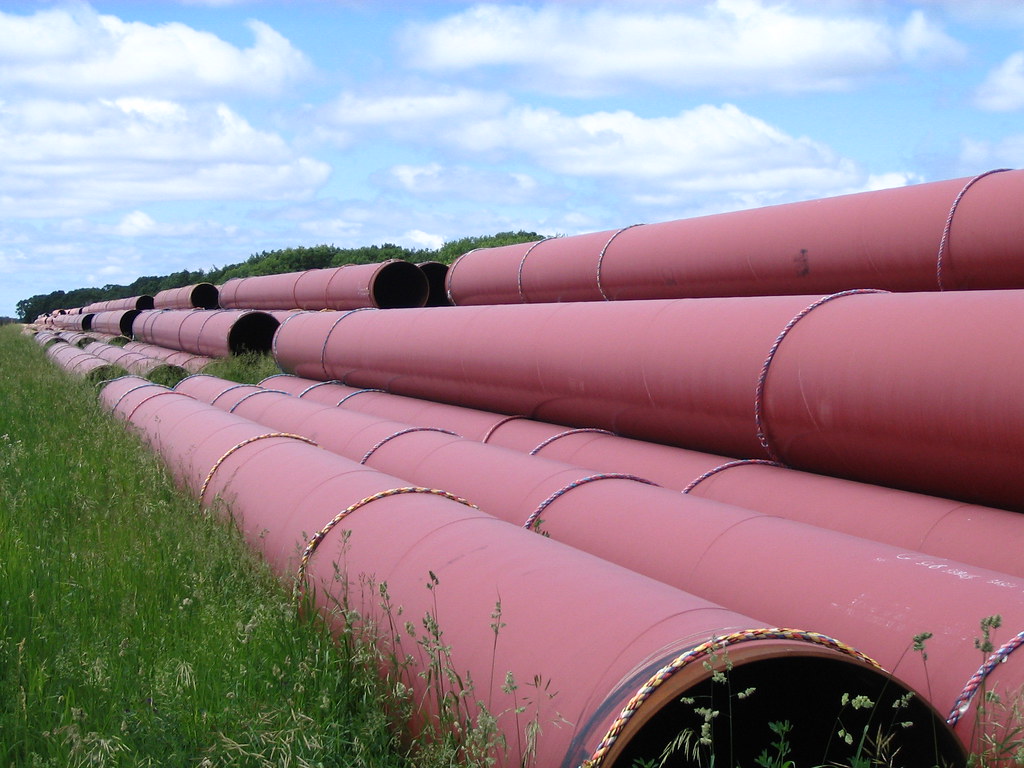
Carney’s answer has been to try to decouple some of that dependence rather than simply absorb the pressure. He has fast-tracked the proposed Pacific Link pipeline, which he told the Calgary crowd would create more than 140,000 jobs and generate revenue for social programs — a notable break from the climate and energy posture associated with his predecessor, Justin Trudeau. The loudest applause of the night, according to multiple outlets present, came when Carney argued the pipeline would reduce Canada’s dependence on the U.S. — a sentence that doubles as both an energy policy pitch and a rebuttal to Alberta’s long-standing complaint that Ottawa treats its oil wealth as something to be managed rather than celebrated.

The Separatist Case and Its Skeptics
Not everyone in Alberta is buying the prime minister’s conversion. Tanya Clemens, co-chair of the pro-independence group Let Alberta Decide, called Carney “formidable for sure” but dismissed his agreements with Smith as “pinky promises” that leave Alberta’s underlying grievances with Ottawa unresolved. Her colleague Keith Wilson went further, rejecting Carney’s claim that global instability makes this the wrong moment for a vote: “The worst timing for this, why? I don’t understand what’s the logic… Then it’s the best time for him to get back to Ottawa.” Wilson also predicted that Carney will eventually use federal authority to tax oil exports as retaliatory leverage against the U.S. — something Carney has explicitly said he sees no value in doing — telling reporters “It’s one cabinet meeting away… He’s gonna do it. He has to do it.” Whether that prediction has any basis beyond Wilson’s own political argument is unclear from the available record, but it points to a deeper distrust among separatists: that no matter what Carney promises today, Ottawa’s historical instinct to treat Alberta’s energy sector as a federal lever remains intact.
That distrust has roots. Carney himself acknowledged at the rally that “the frustrations that many Albertans have felt are real,” recalling that growing up, Ottawa made Albertans feel “like our resources weren’t our own,” and that more recently the province felt its energy contributions were treated as “against the tides of history.” That’s a remarkable admission from a Liberal prime minister in a province that has spent decades feuding with Liberal governments over energy and federal power, and it’s part of what McGill political science professor Daniel Béland called Carney’s “highly unusual” popularity in Alberta for a politician of his party — a popularity Béland attributes partly to a “Trump effect,” in which the U.S. president’s trade war and statehood threats have rallied Canadians, even Albertans, around federal leadership.
A Bigger Pattern: Quebec, Risk Assessment, and the 51st-State Threat
Alberta is not Carney’s only unity problem. Earlier this month, the separatist Parti Québécois won Quebec’s provincial election, falling five seats short of a majority, according to Time’s reporting. Incoming Premier Paul St-Pierre Plamondon has said he intends to hold a referendum on Quebec independence, though he’s vowed not to do so while Trump remains in office. Support for Quebec sovereignty itself remains comparatively low — just 31% according to 338Canada data from October 11 — and Dalhousie University political scientist Lori Turnbull has argued that any Quebec separatist movement would never be driven by a desire for closer alignment with the United States, given the cultural protections Quebec enjoys within the Canadian federation that it would lose outside it.
The annexation rhetoric itself has forced Carney into unusual territory. He told the New York Times last month that he has studied the risk of a U.S. invasion as a matter of what University of Ottawa professor Patrick Leblond calls “tail risk” — low-probability, high-impact scenarios that responsible governments plan for regardless of likelihood. “That’s just risk management,” Carney said. “That’s not a base case, but it would be irresponsible not to [prepare].” Leblond himself argues the more realistic danger isn’t military but economic: “He has weaponized market access to the U.S. What we can expect is more economic pressure from the White House in the coming months.” Former deputy prime minister Chrystia Freeland has gone further, warning it would be “dangerous” to maintain close economic ties with a neighbor that “openly says they want to take you over.”

Our Take
The timing of this referendum is not an accident of provincial politics — it’s a symptom of a decade of unresolved federal-provincial tension colliding with an external shock from Washington that has made that tension newly dangerous. In our view, Carney’s strategy of leaning into Alberta’s grievances rather than dismissing them, paired with concrete concessions like fast-tracking the Pacific Link pipeline, represents a genuine and politically risky attempt to buy back Alberta’s loyalty with substance rather than rhetoric. Whether it’s enough is a separate question: a 75% pro-Canada polling number sounds comfortable, but the fact that a province sitting on the world’s fourth-largest oil reserves needed a prime ministerial rally and a fast-tracked pipeline to get there tells you how thin the margin of goodwill has become.
The more interesting question, in our view, is what happens regardless of Monday’s outcome. Even a decisive pro-Canada vote doesn’t resolve the structural grievance Wilson and Clemens are pointing to — that Ottawa has, at various points, treated Alberta’s energy sector as a bargaining chip rather than a national asset. If Carney’s government ever did move to tax oil exports as retaliatory leverage against Washington, as Wilson predicts it eventually will despite Carney’s denials, it would hand the separatist movement exactly the evidence it needs to argue that nothing has fundamentally changed. For businesses and investors watching this unfold — particularly those exposed to Alberta’s energy sector or to cross-border trade more broadly — the real variable to watch isn’t Monday’s vote tally but whether Carney’s government can keep its promises on pipeline capacity and energy policy durable enough to survive the next round of pressure from Washington. A referendum result is a single data point; a credible, sustained break from Ottawa’s historical treatment of Alberta’s resource base is the thing that would actually settle the question Carney is trying to close this week.
This is a Commentary piece: analysis and editorial perspective from Canadian Business News, clearly distinguished above from the reported facts it’s based on. It is not financial, investment, or legal advice.
Sources