
Canada’s drive to build more homes is running into a problem that no amount of faster zoning approvals can solve on its own: the water and sewer systems many communities depend on are running out of room. At the same time, buyers in some of the country’s priciest markets are finding prices have fallen sharply from their 2022 peak, even as private developers continue to commit hundreds of millions of dollars to new residential projects.
Water and Sewer Capacity Is Becoming a Hard Ceiling
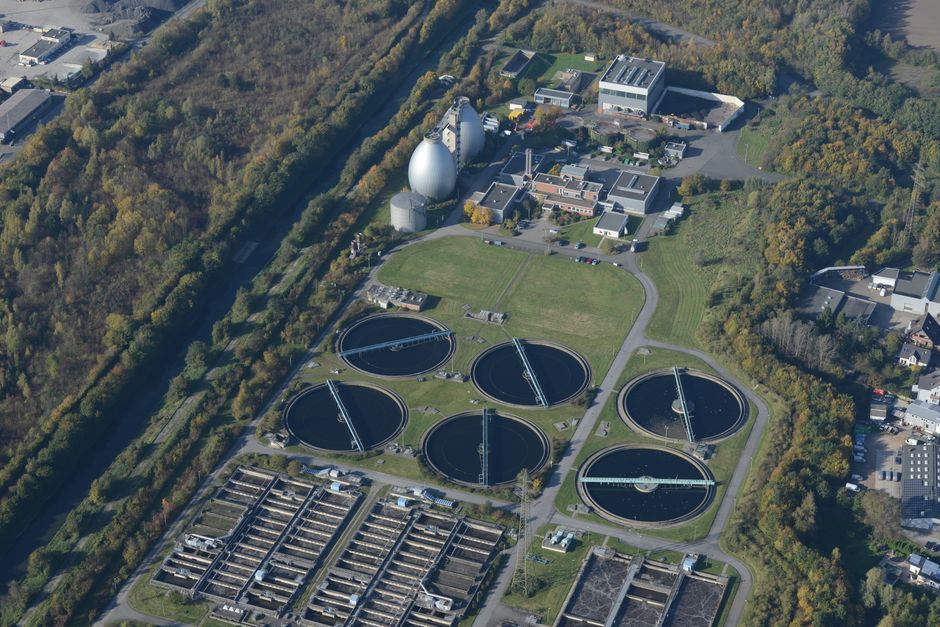
Municipalities and developers across the country are increasingly hitting a wall that isn’t about permits or zoning, but pipes. More than 11 per cent of Canada’s water and wastewater-related infrastructure was rated in poor or very poor condition in 2022, representing an estimated $107 billion in replacement value, according to the 2025 National Infrastructure Assessment.
Tim Tierney, president of the Federation of Canadian Municipalities, which represents more than 2,200 municipalities, said water and wastewater infrastructure is the top obstacle his members report. “Top. Top. Top,” he said. “It’s infrastructure, infrastructure, infrastructure.” Governments can speed up approvals and set ambitious housing targets, he said, but the treatment plants and pipes needed to support that growth take years and billions of dollars to build.
In Winnipeg, the North End Sewage Treatment Plant is undergoing a multibillion-dollar upgrade, but the existing system has only about four years of additional capacity left, enough to serve roughly 40,000 more people — some of which could be consumed by new industrial development. Lanny McInnes, chief executive of the Manitoba Home Builders’ Association, said the wastewater capacity expansion isn’t expected to be finished until 2032. “We’re flashing the signal that we’re getting very, very close to reaching that point,” he said, warning that some surrounding municipalities, including East St. Paul, have already had development restricted because of limited wastewater capacity.
Similar pressures are showing up elsewhere. Tierney pointed to Toronto’s Black Creek trunk sewer, tied to the development of about 63,000 homes, as an example of infrastructure delays affecting large-scale housing plans. Waterloo Region now requires developers to compete for limited wastewater capacity before projects can proceed. North of Calgary, Airdrie is already using about 97 per cent of the water and wastewater capacity allocated to it for 2026, prompting the city to draw up a priority system that ranks schools, health care and emergency services first, followed by industrial and commercial development, with housing third. A $114-million wastewater pipeline expansion connecting Airdrie to Calgary’s treatment system is underway, which the province said could support up to 45,000 new homes.
Amie Blanchette, chief executive of BILD Calgary Region, said housing construction and infrastructure investment need to move together and that the issue extends beyond any single city’s borders. “This isn’t just about the City of Calgary,” she said. “This is about the city, its surrounding municipalities, understanding where growth is and how to accommodate it.”
The financing gap compounds the problem. Supporting each new home requires an average of about $107,000 in municipally owned capital assets, including roughly $39,000 in potable water and wastewater infrastructure alone, according to a 2023 Federation of Canadian Municipalities estimate, though actual costs vary by project type and location. Robert Haller, executive director of the Canadian Water and Wastewater Association, said the housing push is landing at an awkward moment for municipal systems already struggling with aging infrastructure. “We’re starting behind, regardless of new housing,” he said.
Prices Have Pulled Back, but Sellers Haven’t Fully Caught Up
While supply-side infrastructure strains persist, price data reported by the Globe and Mail suggests some relief for buyers in parts of the market. Home prices have dropped by an average of $176,600 across Canada since the 2022 peak, with declines averaging $353,900 in Toronto and reaching as high as $529,100 in Oakville.
Toronto realtor Anya Ettinger said some condos are now selling at or below 2017 values. Yet she described a persistent gap between what buyers are willing to pay and what sellers still expect, a divide she likened to a “Wild, Wild West” of erratic pricing — from listings marked “seller unmotivated, price not flexible” to homes sitting for 180 days in poor condition while owners hold out for above-asking offers. In sought-after neighbourhoods such as Riverdale, the Beaches and Little Portugal, buyers are still paying $100,000 or more over asking as workers return to downtown offices, she said. Ettinger attributed much of the disconnect to sellers anchored to 2022 boom-era valuations and a long-held belief that Toronto real estate is a guaranteed money-maker. “That’s not a guarantee any more,” she said.
Private Developers Are Still Committing Capital
Despite the mixed price signals and infrastructure bottlenecks, private capital continues to flow into new residential projects. Suntex Enterprises announced a letter of intent expanding a Canadian development relationship first unveiled in July 2026, anchored by two Alberta projects — Royal Links in Leduc and Meridian — representing a combined $575 million in project revenue, part of a broader North American development pipeline the company put at more than $1 billion over the next three to five years.
Royal Links is described as a 134-acre master-planned development with roughly 112.7 developable acres and 979 planned residential lots, including 573 single-family lots and 404 semi-detached and townhome lots, alongside multifamily and commercial parcels, school and park space, and stormwater infrastructure. The company said land development for the project is scheduled to begin in the fourth quarter of 2026, with Royal Links alone representing $250 million in project revenue and Meridian a further $325 million. Suntex said it is also negotiating the acquisition of an established Canadian development company to build out its local operating platform.
Together, the infrastructure constraints, shifting price dynamics and continued private investment illustrate a housing sector where the pace of construction is increasingly shaped less by policy ambition than by the physical and financial capacity of the systems underneath it.
This article references reporting from: